


JAPAN

Japan is one of the most beloved destinations among travelers because it combines tradition and modernity in a truly unique way. It is a very clean and orderly country, where every detail is carefully considered. Among its most famous attractions are Fushimi Inari Taisha, known for its iconic red torii gates, and Mount Fuji, the symbol of Japan and a popular destination for hiking and spectacular views. Traveling through Japan allows you to discover both its ancient and traditional side, with temples and breathtaking natural landscapes, and its modern side, with cities filled with bright lights and skyscrapers. This incredible variety makes Japan a complete, fascinating, and always surprising destination.


REQUIRED DOCUMENTS
PASSPORT
A valid passport is required and must remain valid for the entire duration of your stay. There is no minimum remaining validity period required.
Upon entering Japan, travellers must also be able to provide a return or onward flight ticket.
Entry into Japan may be refused if you present a passport that has previously been reported as lost or stolen. Travellers are therefore advised to obtain a new passport before departure if their current passport has previously been reported lost or stolen.
VISA REQUIREMENTS
Italian citizens do not require a visa when travelling to Japan for tourism and staying in the country for up to 90 days within any 180-day period.
For stays exceeding 90 days, a visa is required. Applications can be submitted to the Embassy of Japan in Rome or the Consulate-General of Japan in Milan.
Violations of Japanese immigration laws may result in financial penalties, deportation and a ban on re-entry. In more serious cases, offenders may also face arrest.
VISIT JAPAN WEB
Visit Japan Web is the official online service designed to simplify the entry process into Japan.
Before travelling, you can enter your passport details, flight information, accommodation details and customs declaration online. Once completed, you will receive QR codes to present at the airport.
The service helps speed up immigration and customs procedures and eliminates the need to complete paper forms upon arrival.
👉 For up-to-date information and full details, please consult the Viaggiare Sicuri website.
Although travel insurance is not mandatory, it is advisable to consider taking out appropriate coverage before travelling.
Further details can be found in the dedicated section at the end of the itinerary.

GETTING AROUND
Within cities
Metro: fast, punctual and extensive
Urban trains (JR Lines): an efficient way to connect different neighbourhoods
Buses: particularly useful in less central areas
Taxis: very safe, but relatively expensive
Between cities
Shinkansen (bullet trains): the fastest way to travel between Japan’s major cities
Regional trains: a more affordable alternative to the Shinkansen
Domestic flights: useful for covering longer distances
Other transport options
Bicycle: widely used, especially in Kyoto
Car rental: generally unnecessary in major cities

OFFICIAL CURRENCY:
YEN

10-DAY JAPAN ITINERARY
4 DAYS IN TOKYO
1 DAY FOR A TRIP TO MOUNT FUJI
2 DAYS IN KYOTO
1 DAY IN NARA
2 DAYS IN OSAKA
DAY 1

TOKYO
Tokyo is a city that constantly surprises with its perfect balance of innovation, culture, and tradition. Its streets are filled with giant illuminated screens, iconic neighborhoods such as Shibuya and Shinjuku, and an atmosphere that always feels energetic and alive.
Alongside its modern side, Tokyo is home to historic places such as Sensō-ji Temple and the gardens surrounding the Imperial Palace. The city also offers an incredible culinary variety, from Michelin-starred restaurants to small traditional eateries.
With its combination of shopping, culture, gastronomy, and spectacular city views, Tokyo offers an unforgettable experience for every traveler.
ASAKUSA
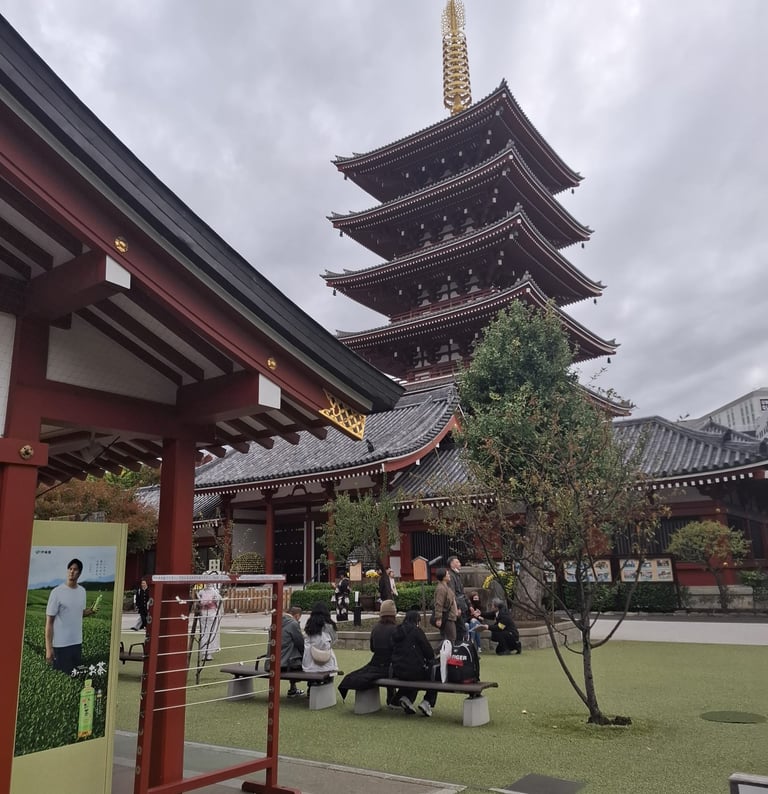
Asakusa is one of the most traditional and atmospheric neighborhoods in Tokyo, famous for its historic character and old-world charm.
The heart of the area is Sensō-ji Temple, the oldest temple in Tokyo, dedicated to the Buddhist goddess Kannon. Its main entrance, Kaminarimon Gate, is easily recognizable by its enormous red lantern, one of the symbols of the neighborhood.
The Nakamise-dori shopping street leads to the temple and is lined with stalls selling souvenirs, traditional sweets, and local specialties.
Asakusa still preserves many customs and traditions from old Tokyo. Walking through its streets, you can experience a strong sense of spirituality, history, and Japanese culture.
The neighborhood is popular with both tourists and locals, offering an authentic glimpse into traditional Japan.
SENSO JI TEMPLE


Sensō-ji Temple is the oldest Buddhist temple in Tokyo and one of the city’s most sacred and iconic places. It is located in the historic Asakusa district and is dedicated to Kannon, the Buddhist goddess of compassion and mercy.
According to legend, the temple was founded in the 7th century after a statue of Kannon was discovered in the Sumida River.
Inside the temple complex, visitors can observe worshippers praying, making offerings, and burning incense, creating a deeply spiritual atmosphere.
Throughout the year, Sensō-ji also hosts several important religious and cultural celebrations, making it a fascinating place to experience both the history and traditions of Tokyo.
AKIHABARA


Akihabara is one of the most famous and vibrant districts in Tokyo, widely known as the heart of otaku culture.
It is famous for its countless shops dedicated to electronics, manga, anime, and video games. The streets are filled with enormous illuminated signs, colorful screens, and eye-catching advertisements.
Akihabara is a true paradise for technology enthusiasts and fans of Japanese pop culture, offering a modern and futuristic atmosphere.
The neighborhood remains lively both during the day and at night, making it one of the most energetic areas of Tokyo.
Akihabara represents the innovative, creative, and colorful side of modern Tokyo.
TOKYO SKYTREE


Tokyo Skytree is one of Japan’s most iconic and modern structures and, standing at 634 meters, it is the tallest tower in the country. Originally built primarily as a telecommunications tower, it quickly became one of Tokyo’s most recognizable landmarks, visible from many parts of the city.
One of its most distinctive features is its unique structure: at the base, it has a triangular shape that gradually becomes circular as it rises. This design was developed to improve earthquake resistance while also creating a striking architectural form.
Inside, there are two main observation decks, one at around 350 meters and another at approximately 450 meters, offering incredible panoramic views across Tokyo. On particularly clear days, you can even see Mount Fuji on the horizon. The experience is very different during the day and at night. During the day, you can appreciate the immense scale of the city, while after dark, Tokyo transforms into a spectacular sea of lights.
OPENING HOURS
Every day: 10:00 AM – 10:00 PM
Weekends & Public Holidays: Opens earlier at 9:00 AM
Last Admission: 9:00 PM
Closure: Open 365 days a year
TICKET PRICES (APPROXIMATE)
Prices may vary slightly between weekdays and weekends, with higher prices on weekends and public holidays.
Tembo Deck (350 m): Adults ¥2,100 – ¥2,400
Combo Ticket (Tembo Deck 350 m + Tembo Galleria 450 m): Adults ¥3,100 – ¥3,500
Discounts: Reduced prices are available for students (12–17 years) and children (6–11 years). Children under 5 years old usually enter free of charge.
DAY 2
TOKYO IMPERIAL PALACE


The Tokyo Imperial Palace is the official residence of the Emperor of Japan, located on the site of the former Edo Castle.
Surrounded by beautiful gardens, moats, and impressive stone walls, it represents an important symbol of Japanese history and culture. The complex combines traditional and modern elements, reflecting the continuity between Japan’s past and present.
Some areas of the gardens are open to the public, allowing visitors to walk among trees, plants, and flowers, particularly beautiful during the cherry blossom season.
The palace hosts official ceremonies and cultural celebrations, helping preserve the traditions of the Japanese imperial family.
Even from the outside, the grandeur of the complex creates a sense of peace, history, and elegance. It is a unique place where nature, art, and culture come together in the heart of Tokyo.
OPENING HOURS & VISITOR INFORMATION
East Gardens:
Opening Hours: 9:00 AM – 4:30 PM
Extended Hours: Until 5:00 PM from mid-April to August; until 4:00 PM from November to February.
Closed: Mondays and Fridays (if a public holiday falls on one of these days, they are closed the following day as well), during the New Year period (December 28 – January 3), and on special occasions.
COST
Admission to the East Gardens: Free
Guided tours of the interior: Also free with advance reservation.
SANTUARIO MEJI-MEJI JINGU
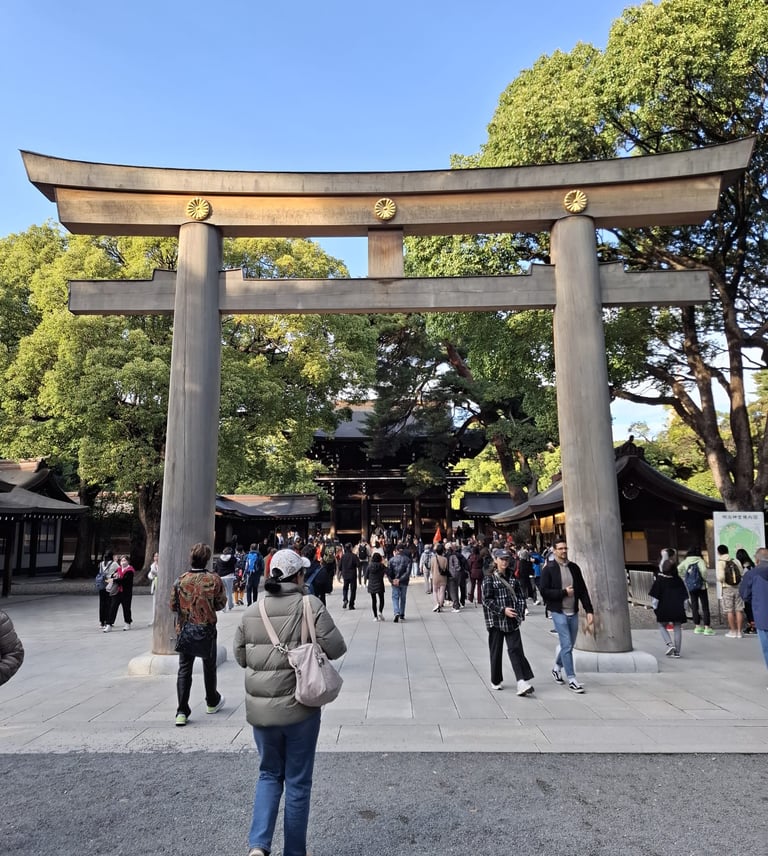
Meiji Jingu Shrine is located within a vast green area surrounded by a man-made forest, creating a peaceful escape from the energy of Tokyo.
The shrine is dedicated to Emperor Meiji and Empress Shōken. Its entrance is marked by imposing wooden torii gates, which create a solemn and spiritual atmosphere.
Meiji Jingu is an important center of Shinto worship, and many visitors come here to pray and take part in traditional rituals.
The shrine is also a popular location for Shinto weddings and other traditional ceremonies. It represents a beautiful place of peace, spirituality, and Japanese tradition in the heart of Tokyo.
OPENING HOURS & ADMISSION
Opening Hours: The shrine opens around sunrise and closes at sunset throughout the year. Generally, it is accessible from approximately 5:00 AM to 6:00 PM.
Admission: Entry to the park and main shrine area is free.
Paid Areas: The Inner Garden and Shrine Museum (Treasure House) require an admission fee of approximately ¥500.
Closures: The Inner Garden is generally closed on Thursdays.
HARAJUKU


Harajuku is one of the liveliest and most colorful neighborhoods in Tokyo, famous for its youth fashion and unique trends.
Takeshita-dori is the heart of the district, filled with shops selling clothing, accessories, and unusual sweets.
Harajuku is also located near Meiji Jingu Shrine, creating a fascinating contrast between traditional Japan and modern youth culture.
The neighborhood is known for its distinctive street style, where you can see young people wearing eccentric styles such as Lolita, punk, and cosplay.
Local events and festivals keep Harajuku constantly buzzing, making it an ideal destination for anyone interested in Japanese pop culture and fashion.
Walking through its streets means immersing yourself in a creative, colorful, and unique side of Tokyo.
SHIBUYA
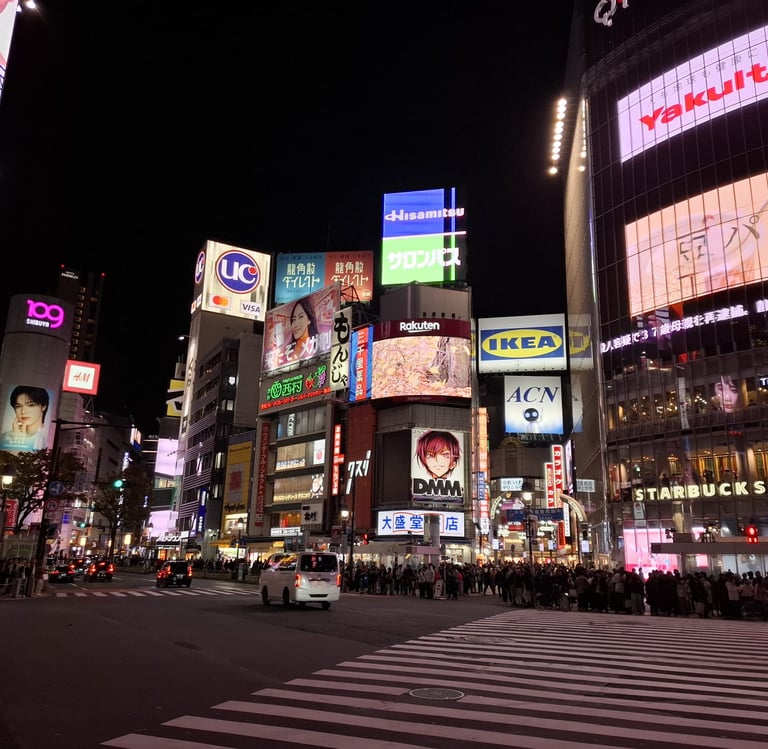
At the heart of the district is Shibuya Crossing, one of the largest and busiest pedestrian crossings in the world, where hundreds of people cross simultaneously from every direction.
The area is packed with shops, major shopping centers, restaurants, and nightlife venues, making it a popular destination for both young people and tourists.
Shibuya is also famous for its iconic landmarks, including the statue of Hachikō, the loyal dog that has become a symbol of loyalty and devotion.
In the evening, the streets light up with neon signs and giant digital screens, creating a vibrant and spectacular atmosphere.
The district represents the modernity and pop culture of Japan, bringing together fashion, technology, and entertainment in one place.
Walking through Shibuya means immersing yourself in the fast-paced and fascinating rhythm of contemporary Tokyo.


In front of Shibuya Station, you’ll find the Hachikō Memorial Statue, one of Japan’s most beloved symbols. Hachikō was an Akita dog who accompanied his owner, Professor Hidesaburō Ueno, to the station every day and returned to wait for him in the evening.
After the professor’s sudden death in 1925, Hachikō continued waiting for him in the same place every day for nearly 10 years. His incredible loyalty touched the entire country, and today his statue remains one of Tokyo’s most iconic landmarks.
HACHIKO
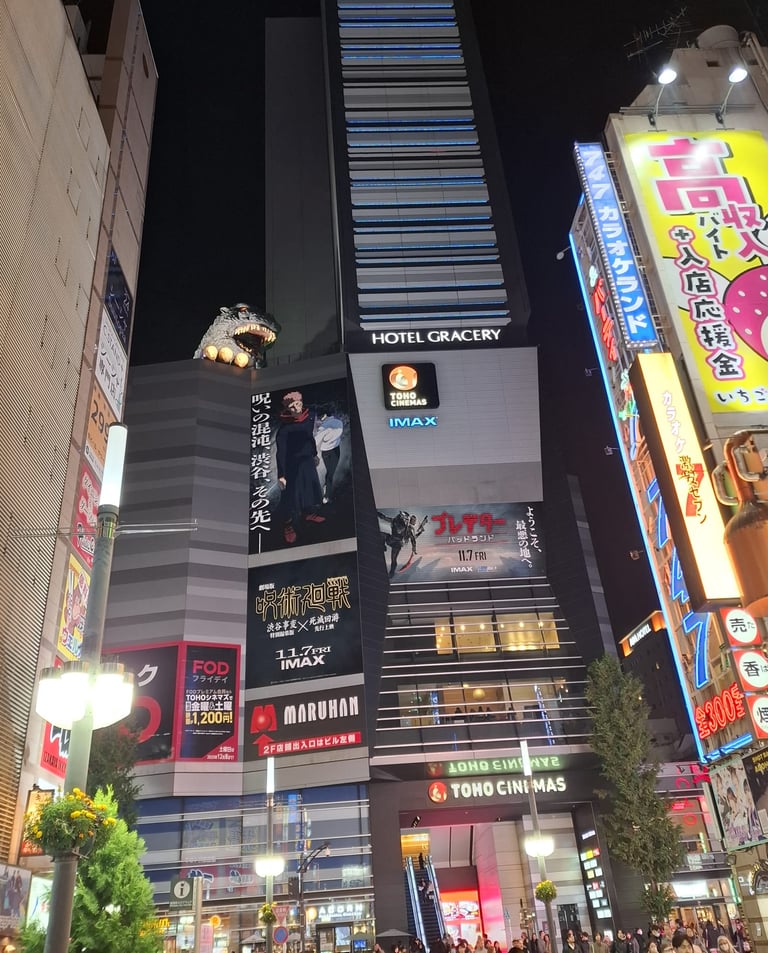
SHINJUKU


The neighbourhood is home to one of the busiest railway stations in the world, making it a major transportation hub for exploring Tokyo and the surrounding areas.
Shinjuku offers a fascinating blend of modernity and tradition, with vast shopping centres and vibrant entertainment districts alongside peaceful temples and gardens, such as the Shinjuku Gyoen National Garden.
The area is also renowned for its lively nightlife, with countless bars, izakaya and karaoke venues. Shinjuku is the beating heart of modern Tokyo, where business, shopping and entertainment come together.
Walking through its streets means experiencing the energy and fast-paced rhythm of the Japanese capital.
DAY 3
GINZA


Ginza is one of Tokyo’s most elegant districts, renowned for its luxury stores, designer boutiques and prestigious department stores. Its wide, brightly lit streets create a sophisticated and distinctly modern atmosphere.
Beyond shopping, Ginza offers an excellent selection of restaurants, trendy cafés and traditional establishments, where you can sample both Japanese and international cuisine.
The district is also an important cultural hub, with numerous art galleries and theatres. At weekends, some of its main streets become pedestrian-only, making them perfect for a leisurely stroll and a spot of window shopping.
Ginza embodies the elegant and modern side of Tokyo, bringing together shopping, culture and entertainment in one vibrant neighbourhood.
ODAIBA
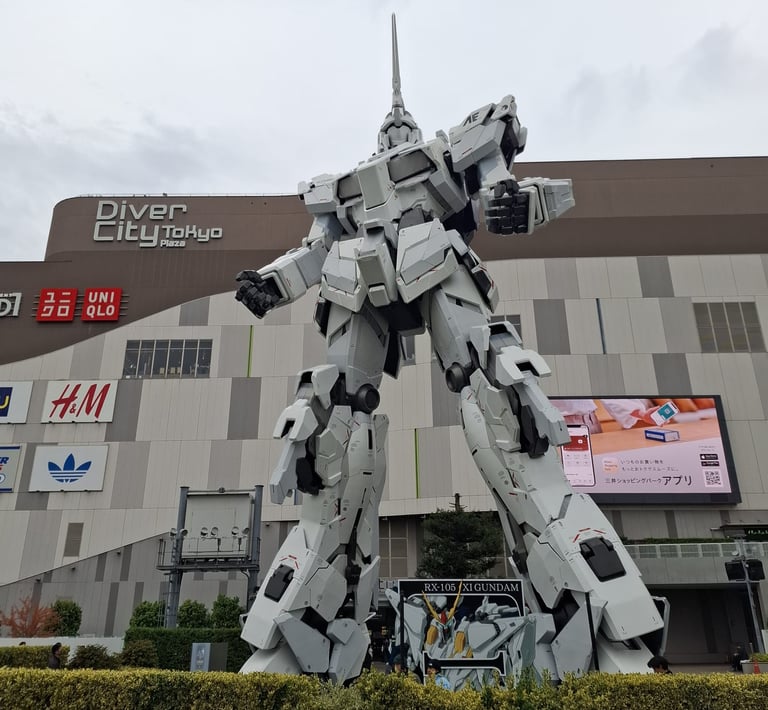
Odaiba is a man-made island in Tokyo Bay, known for its shopping centres, entertainment venues and modern attractions. The island offers spectacular views of the Rainbow Bridge and Tokyo’s skyline, particularly in the evening, when the city lights reflect across the water.
Odaiba is home to major complexes such as DiverCity Tokyo Plaza, famous for its giant Gundam statue, as well as VenusFort, a shopping centre designed to recreate a European-inspired atmosphere.
The island is also a popular destination for outdoor leisure, with artificial beaches, waterfront promenades and open spaces used for events.
Odaiba combines entertainment, shopping and impressive waterfront scenery, making it an ideal destination for families, tourists and fans of technology and Japanese pop culture.
A stroll around the island offers a unique opportunity to enjoy modernity and relaxation side by side.
STATUE OF LIBERTY
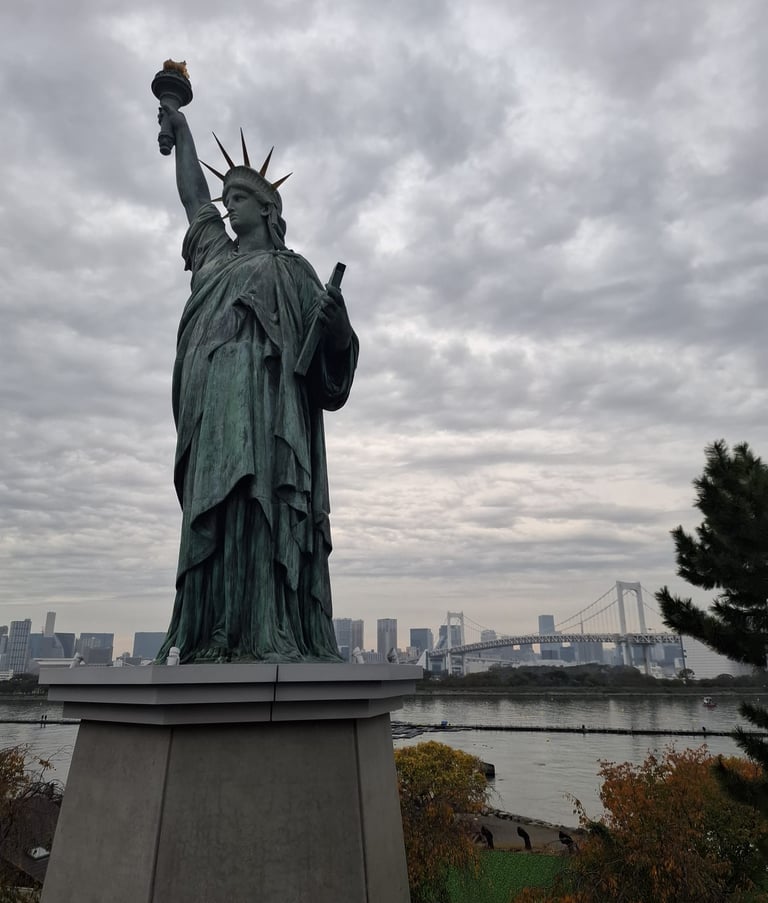
Tokyo is home to a replica of the Statue of Liberty, located on the man-made island of Odaiba in Tokyo Bay. Standing approximately 11–12 metres tall, it is considerably smaller than the original in New York.
The statue is located near Odaiba Marine Park (Odaiba Kaihin-koen), offering beautiful views of the Rainbow Bridge and Tokyo Bay skyline.
The original statue was installed in 1998 to celebrate the friendship between France and Japan. It proved so popular with visitors that a permanent replica was created at the same location in 2000.
Today, it is one of Odaiba’s most photographed landmarks, making it a popular stop for visitors exploring the island.
ROPPONGI


Roppongi is a lively district of Tokyo, known for its nightlife, bars, restaurants and clubs. During the day, the area offers plenty of shops, cafés and cultural attractions such as the Mori Art Museum and Roppongi Hills.
In the evening, the lights of the skyscrapers create a modern and vibrant atmosphere. The neighbourhood is popular with both tourists and international residents, giving it a distinctly cosmopolitan character.
Roppongi combines entertainment, culture and modernity, showcasing Tokyo’s international side. Walking through its streets means experiencing the energy of the city at any time of day.
SUMO MATCH
At first, I hadn’t planned on doing this activity, even though I knew that sumo is one of Japan’s most famous traditions. We decided to give it a try at the last minute, and it turned out to be one of the most incredible and fun experiences of the entire trip.
The event gave us the chance to watch a real sumo match, cheer for the wrestlers, and discover more about their daily training and traditions. To finish things off, six lucky participants even had the opportunity to challenge these giants in the ring!
My brother was one of the six, and watching his reaction was absolutely hilarious.
It was a unique, exciting and unforgettable experience, and I would definitely recommend it to anyone who wants to experience Japan in a more authentic and entertaining way.

DAY 4
ESCURSIONE MONTE FUJI
This was one of the first experiences I added to my itinerary because, when you think of Japan, Mount Fuji is probably one of the first images that comes to mind.
It’s worth keeping in mind that the chances of seeing Mount Fuji clearly can be quite low due to weather conditions, clouds, fog and other factors. Luckily, we were incredibly fortunate that day: the weather was beautiful and warm, and Mount Fuji was visible in all its glory.
The excursion also included several must-see stops, including Lake Ashi, the volcanic valley of Owakudani, and the Hakone Ropeway, making the day even more memorable.
It was an unforgettable experience and, in my opinion, a must for anyone visiting Japan.

DAY 5
SHINJUKU GYOEN NATIONAL GARDEN
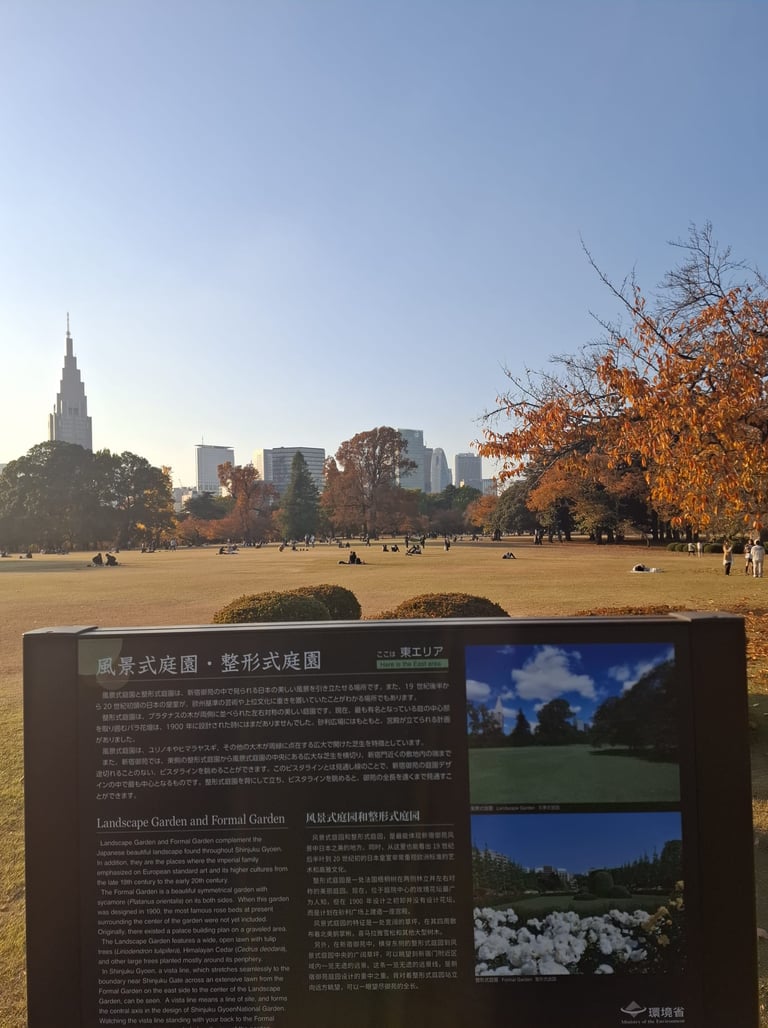
Shinjuku Gyoen National Garden is a large park in the heart of Shinjuku, perfect for anyone looking to escape the fast pace of the city and enjoy some peace and quiet.
The garden combines traditional Japanese, French and English landscape styles, creating a variety of beautiful and harmonious scenery. It is particularly famous for its cherry blossoms in spring and the warm autumn colours that attract visitors throughout the seasons.
With its wide lawns, ponds and tree-lined paths, Shinjuku Gyoen is the perfect place to take a walk, relax and spend a few hours surrounded by nature in the middle of Tokyo.
OPENING HOURS
The garden is usually closed on Mondays (or the following day if Monday is a public holiday), as well as during the year-end holiday period from December 29 to January 3.
March 15 – June 30: 7:00 AM – 6:00 PM
July 1 – August 20: 7:00 AM – 7:00 PM
August 21 – September 30: 7:00 AM – 6:00 PM
October 1 – March 14: 7:00 AM – 4:30 PM
Last admission: 30 minutes before closing
Special opening: During the cherry blossom season (March/April) and chrysanthemum season (November), the garden remains open every day.
TICKET PRICES
Tickets can be purchased from the automatic ticket machines at the entrance.
Adults: ¥500
Seniors (65+): ¥250 (valid ID required)


OMOIDE YOKOCHO
Omoide Yokocho is a small maze of narrow alleyways in the heart of Shinjuku, known for its simple and authentic atmosphere.
The area is home to many tiny restaurants and bars serving Japanese favourites such as yakitori and ramen, often with customers sitting side by side in a lively and intimate setting.
Dating back to the post-war period, Omoide Yokocho has preserved a retro atmosphere that contrasts with the modern skyscrapers surrounding it. The area becomes especially lively in the evening, making it a great place to enjoy a more authentic, casual and traditional side of Tokyo.


MARUNOUCHI
Marunouchi is an elegant district in central Tokyo, located between Tokyo Station and the Imperial Palace. It is a modern and well-organised area, known for its skyscrapers, offices and high-end boutiques.
During the day, the neighbourhood is busy with professionals and commuters, while in the evening it becomes quieter and more sophisticated. The area also offers stylish restaurants, cafés and beautifully maintained green spaces, making it a pleasant place to take a break while exploring the city.


IKEBUKURO
Ikebukuro is one of Tokyo’s liveliest districts, known for its shopping centres, arcades and colourful neon signs. One of its main attractions is Sunshine City, a huge complex featuring shops, an aquarium and a panoramic observation deck.
The neighbourhood is also particularly popular with fans of anime and Japanese pop culture, thanks to its many shops dedicated to manga, video games and cosplay. It’s a great area to explore for those looking to experience a more youthful and energetic side of Tokyo.
DAY 6

TOKYO - KYOTO
Per andare da Tokyo a Kyoto, il modo più veloce e comodo è il treno Shinkansen. Parte dalle stazioni principali di Tokyo (Tokyo Station o Shinagawa) e arriva direttamente a Kyoto in circa 2 ore e 15 minuti con il treno più rapido.
KYOTO

Kyoto is one of Japan’s most fascinating and culturally rich cities, renowned for its history, traditions and timeless atmosphere. Once the country’s imperial capital, the city is home to countless temples, shrines and historic landmarks.
Among its most famous attractions are Kinkaku-ji (the Golden Pavilion), Kiyomizu-dera and Fushimi Inari, known for its thousands of striking red torii gates.
Kyoto is also famous for its traditional neighbourhoods, such as Gion, closely associated with geisha culture. The city perfectly combines nature, spirituality and Japanese traditions, offering a peaceful and authentic atmosphere.
Walking through Kyoto means discovering a more traditional side of Japan, where history and everyday life continue to coexist.
KINJAKU JI
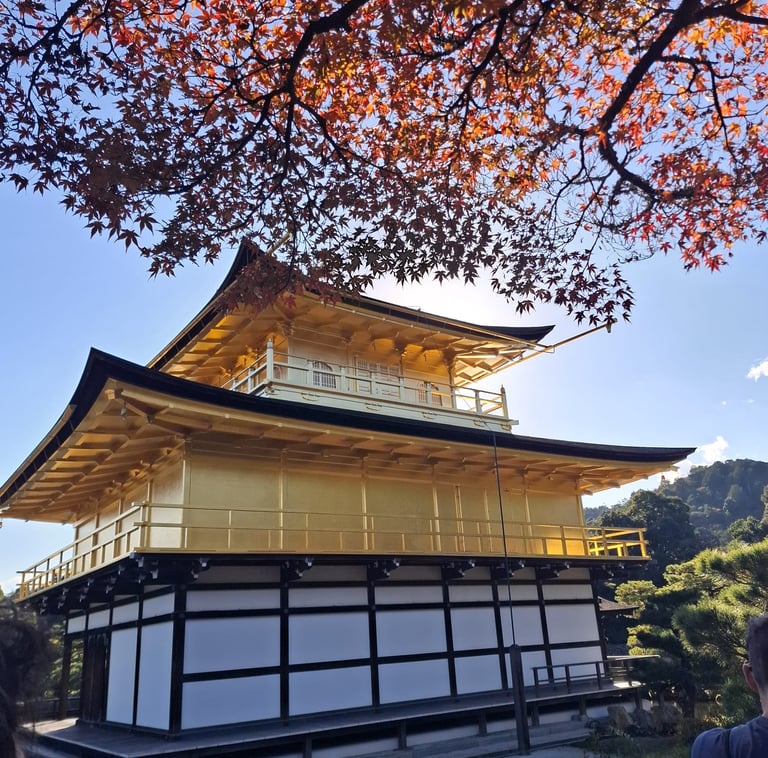
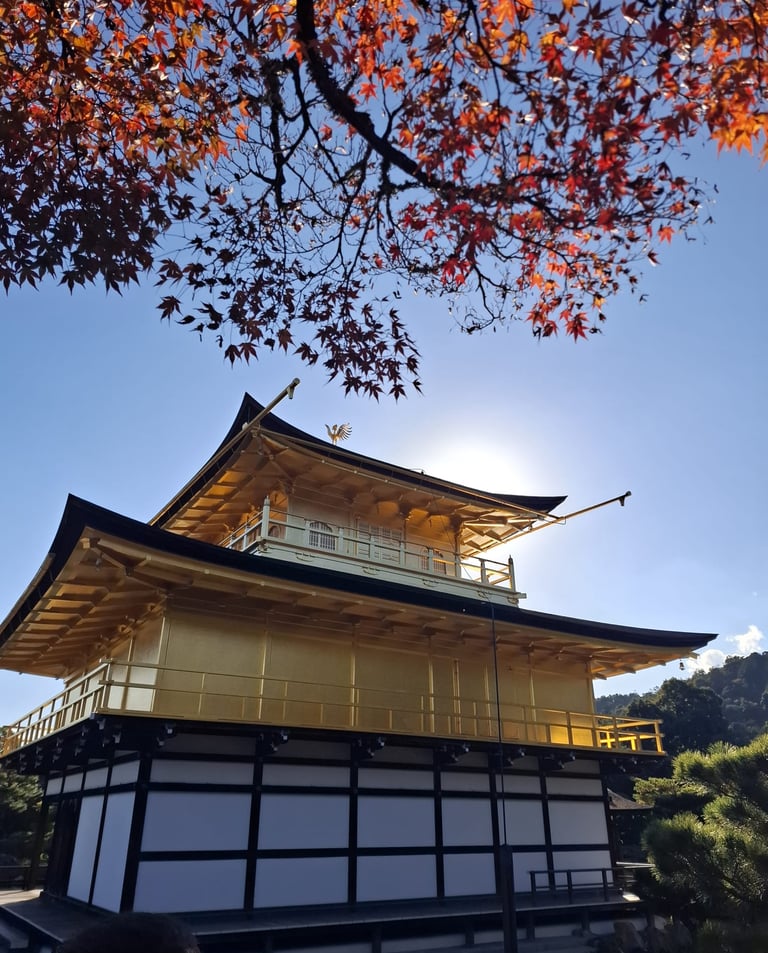
Kinkaku-ji, also known as the Golden Pavilion, is one of Kyoto’s most famous temples. Originally built in the 14th century as a villa for shogun Ashikaga Yoshimitsu, it was later converted into a Zen temple.
The three-storey structure features a different architectural style on each floor, while its upper levels are covered in gold leaf, creating a spectacular reflection in the surrounding Kyōko-chi Pond.
The temple is surrounded by traditional Japanese landscaped gardens, with peaceful paths, bridges and small ponds. Its beauty changes with the seasons, from the lush greenery of spring to the vibrant autumn colours and snow-covered landscapes in winter.
A visit to Kinkaku-ji offers a chance to experience Japanese beauty, spirituality and harmony with nature in one of Kyoto’s most iconic settings.
USEFUL INFORMATION FOR YOUR VISIT
Opening hours: 9:00 AM – 5:00 PM (last admission shortly before closing).
Admission: ¥500 for adults, ¥300 for children.
Tip: The busiest time is usually around midday, so it is best to arrive at opening time.
Be careful not to confuse it with Ginkaku-ji (the Silver Pavilion), which has different opening hours: 8:30 AM – 5:00 PM.
NIKKO CASTLE
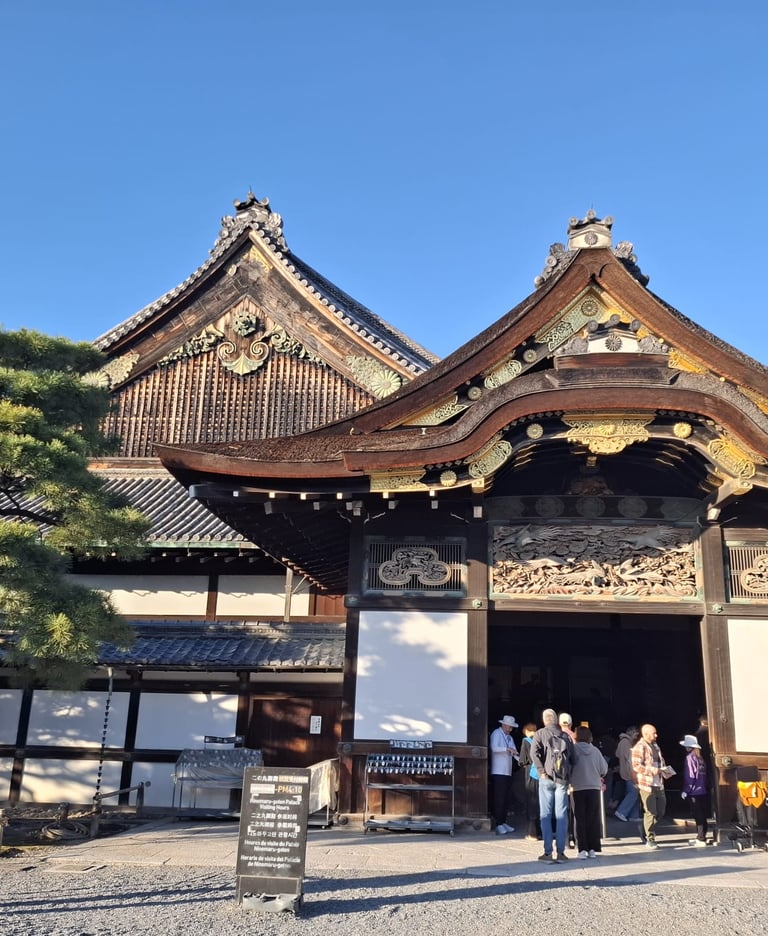
Nikkō Tōshō-gū is one of Japan’s most important and impressive shrines, located in the city of Nikkō, in Tochigi Prefecture. Built in the 17th century and dedicated to Tokugawa Ieyasu, it is one of the finest examples of richly decorated traditional Japanese architecture.
The complex is famous for its intricate wood carvings, colourful gates and detailed sculptures, including the iconic Three Wise Monkeys and the sleeping cat.
Surrounded by ancient cedar forests, Tōshō-gū offers a peaceful and spiritual atmosphere that contrasts with its incredibly elaborate decorations. The shrine is part of the UNESCO World Heritage Site of the Shrines and Temples of Nikkō and includes numerous buildings, shrines and pagodas throughout the complex.
USEFUL INFORMATION FOR YOUR VISIT
Opening hours: 8:45 AM – 5:00 PM (last admission at 4:00 PM).
Closing days: Usually Tuesdays in January, July, August and December, as well as December 29–31.
Ticket prices (indicative):
Adults: ¥600–800 (often including access to the garden and Ninomaru Palace).
Middle/High school students: ¥400.
Children (elementary school and under): ¥200–350.
Audio guides: Available at the entrance for approximately ¥500.
It is recommended to check the official website before visiting for any changes to opening hours, especially during public holidays or particular seasons.
The visit usually takes around 1.5 to 2 hours.
KYOTO IMPERIAL PALACE
The Kyoto Imperial Palace was the residence of Japan’s emperors until the 19th century and is located in the heart of the city. The complex is surrounded by extensive gardens and traditional walls, creating a peaceful and atmospheric setting.
Inside, visitors can admire historic rooms, courtyards and traditional architecture reflecting the elegance and refinement of the imperial court.
The surrounding gardens are open to visitors and offer beautiful green spaces for walking while taking in the historic architecture.
The Kyoto Imperial Palace is an important symbol of Japan’s history, culture and traditions, offering a glimpse into the country’s imperial past.


OPENING HOURS
April – August: 9:00 AM – 5:00 PM (last admission at 4:20 PM)
March & September: 9:00 AM – 4:30 PM (last admission at 3:50 PM)
October – February: 9:00 AM – 4:00 PM (last admission at 3:20 PM)
CLOSING DAYS
Mondays (if Monday is a public holiday, the following Tuesday)
New Year holiday period: December 28 – January 4
Certain days when special imperial ceremonies or events take place
VISITOR TIPS
Entrance: The main recommended entrance is usually through Seishomon Gate.
Security: Visitors are subject to a security check upon entry.
Park: The surrounding Kyoto Gyoen National Garden is open year-round and can be visited free of charge.
ADMISSION & ACCESS
Admission: Free
Reservations: Advance reservations are generally no longer required. Visitors can enter freely and follow the designated route.
KYOTO TOWER
Kyoto Tower is one of Kyoto’s modern landmarks, standing 131 metres tall and located near the city’s main train station. From its observation deck, you can enjoy panoramic views of the entire city, nearby temples and, on a clear day, the distant mountains.
Built in 1964, the tower features a modern design that contrasts with Kyoto’s traditional buildings. At the base, you’ll find shops, restaurants and event spaces, making it a convenient and interesting place to visit.
Kyoto Tower is perfect for anyone looking for panoramic views and a convenient experience in the heart of the city.


USEFUL INFORMATION:
Opening hours: 10:00 AM – 9:00 PM (last admission at 8:30 PM).
Prices (indicative):
Adults: ¥900.
Middle/High school students: ¥700.
Elementary school children: ¥350–¥200.
Children (3–5 years): ~¥150..
DAY 7
FUSHIMI INARI
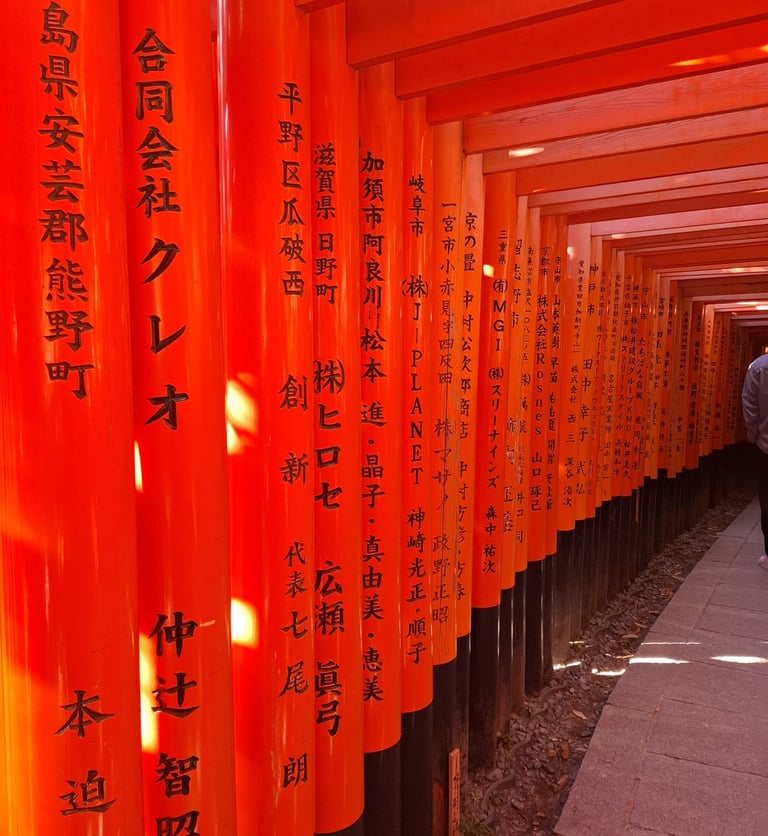
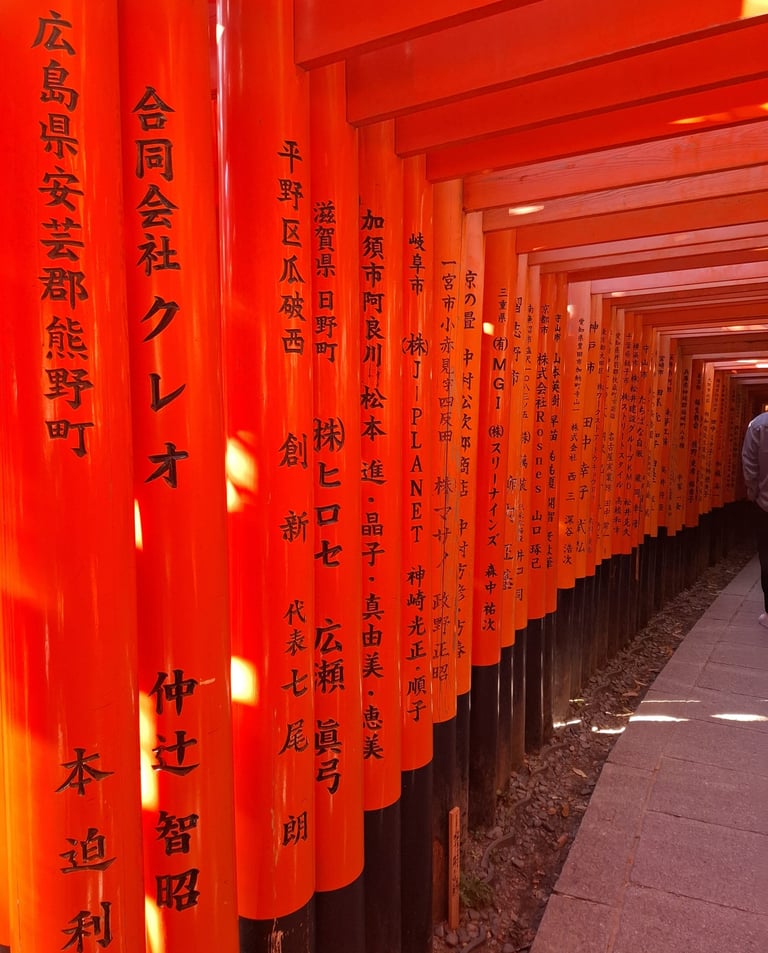
Fushimi Inari Taisha is one of Kyoto’s most famous shrines, known for its thousands of red torii gates that form long and atmospheric paths through the hills. It is dedicated to Inari, the Shinto god of rice and prosperity, and each torii is donated by individuals or companies as a sign of gratitude.
The main shrine is located at the foot of the hill, while the paths continue through forests and past small shrines all the way to the summit, offering panoramic views of the city.
Walking through the torii gates is a unique experience, combining spirituality and nature. Fushimi Inari is one of Kyoto’s most iconic landmarks and one of the most photographed places in Japan.
Opening hours: Accessible 24 hours a day (the main area is always open, and the outdoor areas have no closing hours).
Admission: Free.
Visit duration: Around 2–3 hours to walk the entire trail to the summit and back.
Tips: Go early in the morning or around sunset to enjoy the lantern-lit paths in a quieter atmosphere.
KIYOMIZU DERA
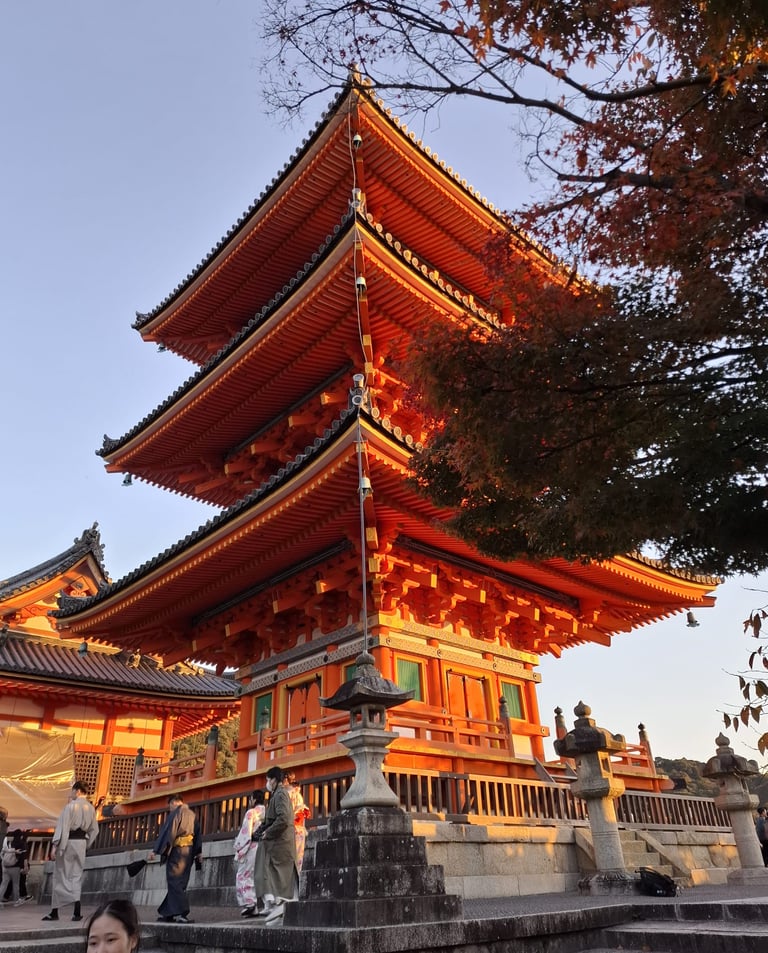
Kiyomizu-dera is one of Kyoto’s most famous and visited temples, founded in 778 and located in the eastern hills of the city. The name “Kiyomizu” means “pure water” and comes from the nearby Otowa Spring, whose waters are considered sacred and believed to bring health, longevity and success.
The complex includes numerous buildings, smaller shrines and temples, all surrounded by beautiful natural scenery. During spring and autumn, the temple becomes particularly stunning thanks to the cherry blossoms and colourful autumn leaves.
Kiyomizu-dera is a UNESCO World Heritage Site and represents a symbol of Japanese spirituality, history and art. A visit offers a unique experience combining architecture, nature and religion.


OPENING HOURS:
Standard hours: 6:00 AM – 6:00 PM.
July and August: 6:00 AM – 6:30 PM.
Special illuminations: During the cherry blossom season (spring) and autumn foliage season (November), the temple remains open until 9:00 PM.
TICKET PRICES:
Adults: ¥400–¥500 (approximately €2.50–€3.20).
Middle/Elementary school students: Around ¥200.
GINKAKU JI
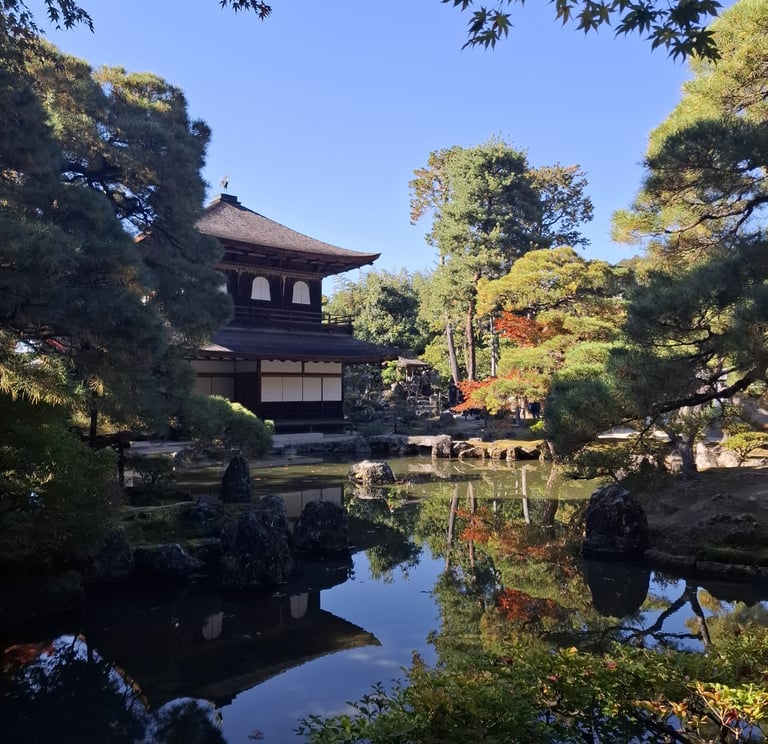
Ginkaku-ji, also known as the Silver Pavilion, is one of Kyoto’s most important temples. It was built in the 15th century as the residence of shogun Ashikaga Yoshimasa and was later converted into a Zen temple.
The complex is famous for its gardens, featuring carefully raked sand and beautifully maintained landscapes. Unlike Kinkaku-ji, it is not covered in silver, but instead represents simplicity and elegance.
Ginkaku-ji is closely associated with the development of Japanese aesthetic culture.
GINKAKU-JI VISITOR INFORMATION (SILVER PAVILION):
Opening hours:
March – November: 8:30 AM – 5:00 PM
December – February: 9:00 AM – 4:30 PM
Closing days: Open every day (no regular closing days).
Admission:
Adults: ¥500
Children/Students: Reduced prices available (usually around ¥300).
Payment: Cash only.
GION


Gion is a famous historic district of Kyoto, known for its traditional streets and wooden houses. It is the heart of geisha culture, with geiko and their apprentices, known as maiko, often seen walking elegantly through the neighbourhood.
The area is home to teahouses, traditional restaurants and craft shops where you can discover local cuisine and handicrafts. Gion is also famous for the Gion Matsuri, one of Japan’s most important festivals.
Walking through Gion offers a chance to experience the history and traditions of old Japan.
THE PHILOSOPHER'S PATH
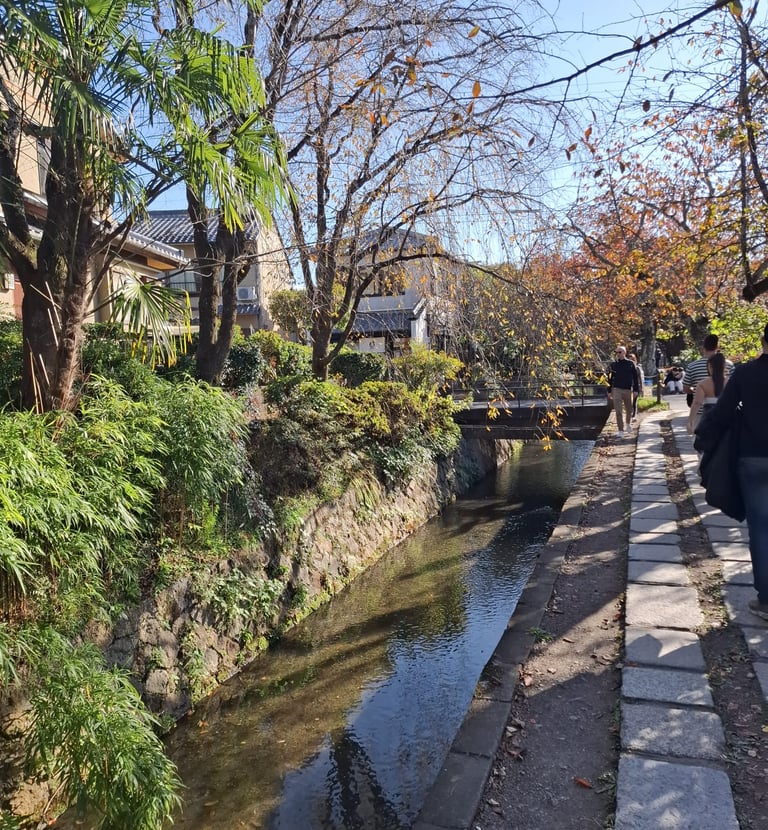
The path connects several important temples, including Ginkaku-ji, and is known for its calm and relaxing atmosphere. Its name comes from the Japanese philosopher Nishida Kitarō, who walked along it every day while meditating.
During spring, the path becomes particularly beautiful thanks to the blooming cherry trees. It is an ideal place to walk in silence and take some time to reflect.
The Philosopher’s Path is a peaceful corner surrounded by the natural beauty of Kyoto.
DAY 8
NARA
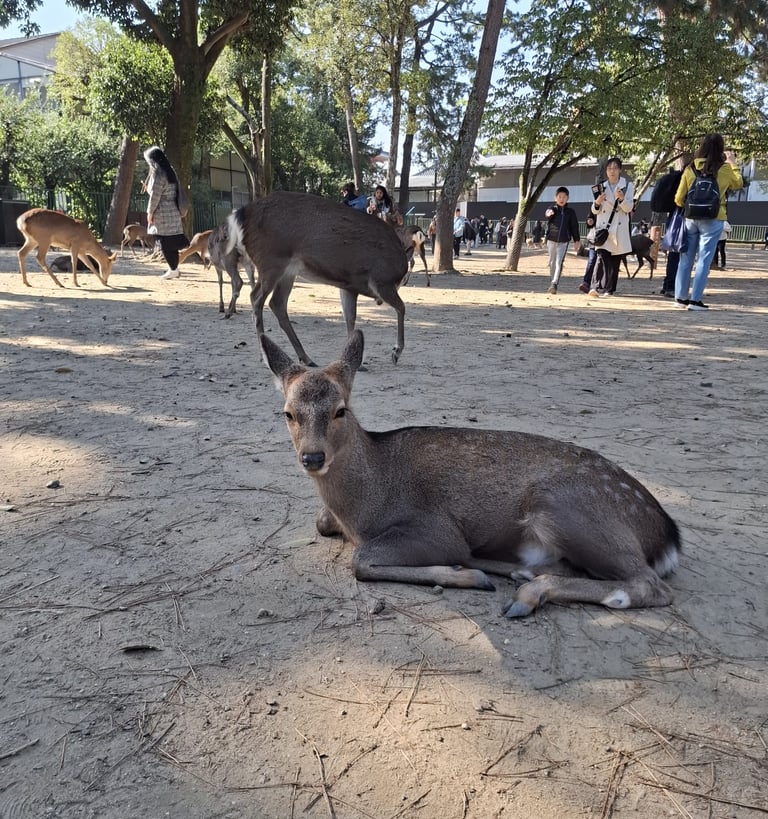
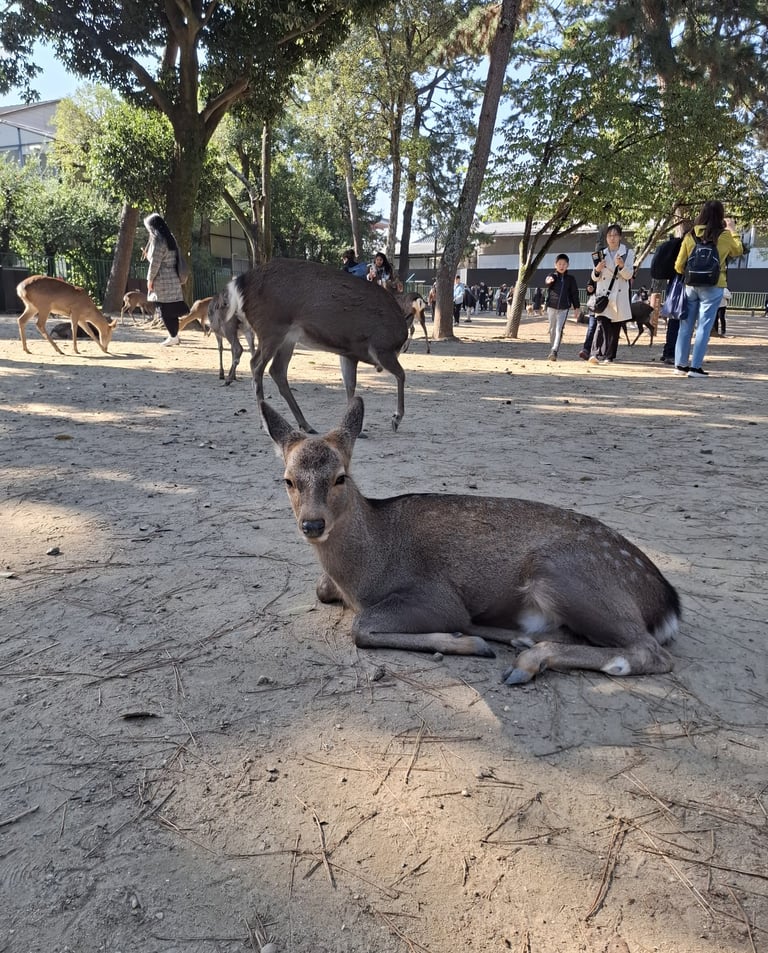
Ho deciso di trascorrere il mio 28° compleanno a Nara e vale davvero la pena dedicarci almeno mezza giornata. La città è famosa per il suo Parco dei Cervi, dove vivono centinaia di cervi che possono essere nutriti dai visitatori. La particolarità di questi animali è che, dopo averli sfamati, fanno un piccolo inchino per ringraziarti! Attenzione, però: se non dai loro da mangiare possono diventare un po’ aggressivi, cercare cibo tra le tue tasche o, in alcuni casi, persino spingerti. Non c’è bisogno di portare nulla da casa, perché nel parco ci sono diversi venditori che, con pochi yen, ti possono dare i biscotti appositi per i cervi. È stata un’esperienza divertente e molto originale, perfetta per avvicinarsi alla natura e alla cultura giapponese.
DAY 9
SHINKANSEN TRAIN FROM KYOTO TO OSAKA
Getting around between Kyoto and Osaka is easy and quick. The most convenient option is the train, which connects the two cities in around 15–30 minutes, depending on the line you choose.
OSAKA

Osaka is one of Japan’s largest and most important cities, located in the Kansai region. It is known for its lively atmosphere and delicious local cuisine, including takoyaki and okonomiyaki, which are popular throughout the country. The city is home to famous neighbourhoods such as Dotonbori, packed with bright lights, restaurants and entertainment, and Umeda, a modern commercial district. Osaka also has great historical significance, represented by Osaka Castle, one of the city’s most iconic landmarks.
Osaka is a modern, dynamic and welcoming city, famous for the friendly and outgoing nature of its residents. Visiting Osaka means discovering a fun, delicious and lively side of Japan.
OSAKA CASTLE
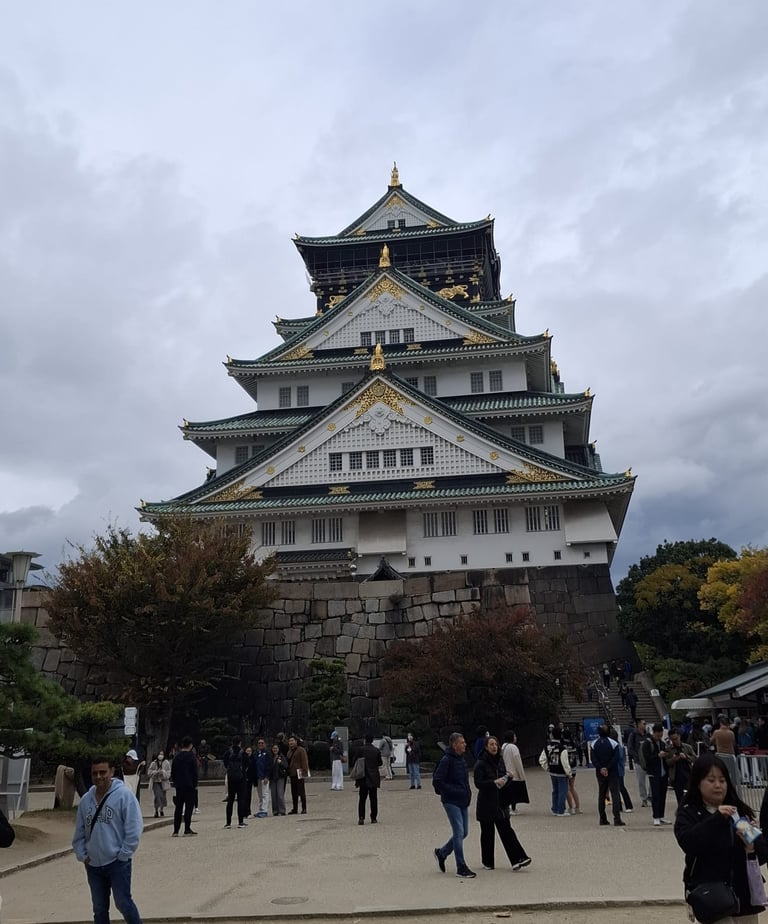
Osaka Castle is one of Japan’s most important and famous landmarks and a symbol of the city of Osaka. It was built in the 16th century by the powerful feudal lord Toyotomi Hideyoshi and played a central role in the country’s history.
The castle is surrounded by large parks, moats and stone walls, which are especially popular during the cherry blossom season. The current structure houses a museum that tells the story of the castle and Japan’s feudal era.
From the top, you can enjoy panoramic views of the city. Osaka Castle offers a perfect balance of history, nature and modernity.
KEY INFORMATION:
Opening hours: 9:00 AM – 5:00 PM (last admission at 4:30 PM). Extended opening hours may apply during the cherry blossom season (hanami) and in summer.
Admission: ¥600 (adults). Free for children up to 15 years old.
Nishinomaru Garden: Requires a separate ticket (usually ¥200–¥350).
Closing days: Usually closed during the year-end holiday period (December 28 – January 1).
Note: It is always advisable to check the official Osaka Castle website for any temporary changes.
KEMA SAKURANOMIYA PARK


Kema Sakuranomiya Park is a riverside park in Osaka, perfect for a relaxing walk surrounded by greenery. The park stretches along the banks of the Okawa River and is popular with both locals and visitors for its peaceful atmosphere and beautiful river views.
The park features a long walking path, ideal for walking, running or simply sitting and enjoying the scenery. It’s a great place to take a break from the fast pace of the city and spend some time outdoors, perhaps stopping for a break or a picnic.
It’s a simple but pleasant stop to include in an Osaka itinerary, especially if you want to add a relaxing moment between sightseeing.
OSAKA TENMANGU


Osaka Tenmangu is one of the city’s most important and historic Shinto shrines. Founded in the 10th century, it is dedicated to Sugawara no Michizane, a highly respected figure in Japanese culture who is regarded as the deity of learning, knowledge and the arts.
The shrine is particularly famous for the Tenjin Matsuri, one of Japan’s three major traditional festivals. Every year, it attracts thousands of visitors with its processions, illuminated boats along the river and spectacular fireworks.
The shrine’s architecture perfectly reflects traditional Japanese style, with wooden details, lanterns and peaceful spaces that create a striking contrast with Osaka’s modern and dynamic atmosphere.
QUICK INFORMATION:
Opening hours: Approximately 9:00 AM – 5:00 PM.
Admission: Free entry to the main shrine.
UMEDA SKY BUILDING


The Umeda Sky Building is one of Osaka’s most famous and modern skyscrapers. It consists of two towers connected at the top by a panoramic structure known as the Floating Garden Observatory.
From the observation deck, you can enjoy spectacular views over the city, especially at sunset and at night. The building features a futuristic design and is an important symbol of modern Osaka. At the base, you’ll find shops, restaurants and green spaces.
KEY INFORMATION:
Opening hours: 10:00 AM – 10:30 PM (last admission at 10:00 PM).
Prices (indicative):
Adults: ¥1,000 (approximately €6–7).
Children: ¥700–¥200, depending on age.
It is recommended to check the official website before visiting for any changes to prices or special opening hours.
DAY 10
SHITENNO-JI
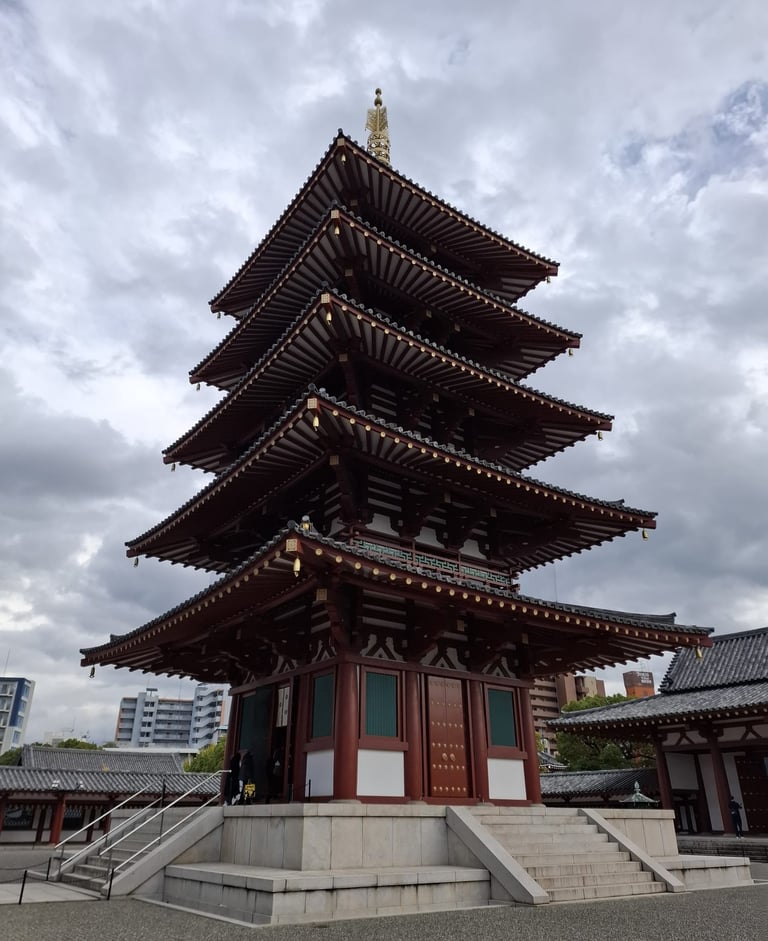
Shitennō-ji is one of the oldest Buddhist temples in Japan. It was founded in 593 by Prince Shōtoku, who played an important role in the spread of Buddhism throughout the country. The temple is dedicated to the Shitennō, the “Four Heavenly Kings”, protective deities in Buddhist tradition.
The complex follows an ancient architectural layout, featuring a five-storey pagoda, the main hall (Kondō) and other buildings arranged along a central axis. Over the centuries, the temple has been destroyed and rebuilt several times, while preserving its original architectural style.
Today, Shitennō-ji remains an important religious and historical site in Osaka.
Opening hours:
April – September: 8:30 AM – 4:30 PM.
October – March: 8:30 AM – 4:00 PM.
21st and 22nd of each month: Extended opening hours (e.g. until 5:00 PM in summer and 4:30 PM in winter).
Last admission: Usually 30 minutes before closing.
Admission fees (by area):
Outdoor area: Free.
Main temple area: ¥300.
Gokuraku-jodo Garden: ¥300.
Treasure House: ¥500.
Note: Prices and opening hours may change, so it is recommended to check the official website before your visit
SHINSEKAI AND TSUTENKAKU TOWER
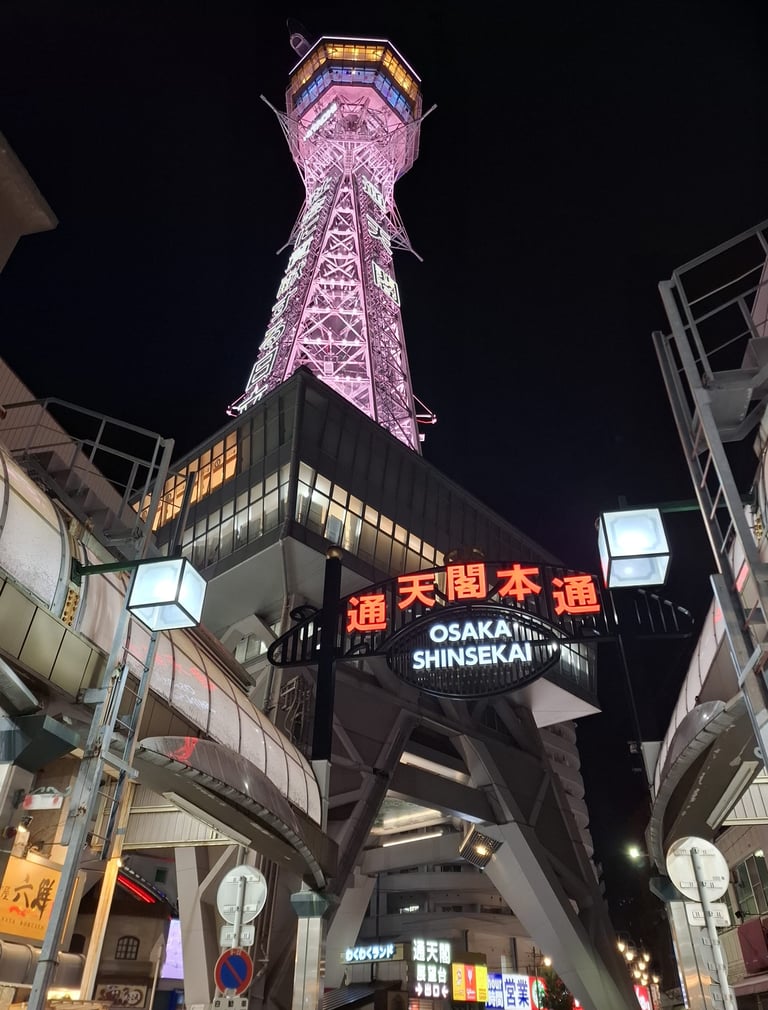
Shinsekai is a historic and distinctive neighbourhood in Osaka, known for its lively streets, traditional restaurants and colourful signs with a charming retro atmosphere.
At the heart of the neighbourhood stands Tsutenkaku Tower, built in the early 20th century and now one of the symbols of the city. The tower offers beautiful panoramic views of Osaka and the surrounding areas, while its colourful lights make it particularly impressive at night.
Shinsekai, together with Tsutenkaku Tower, offers a unique mix of popular culture, history and everyday life, making it a must-see stop for anyone visiting Osaka.
NAMBA YASAKA SHRINE
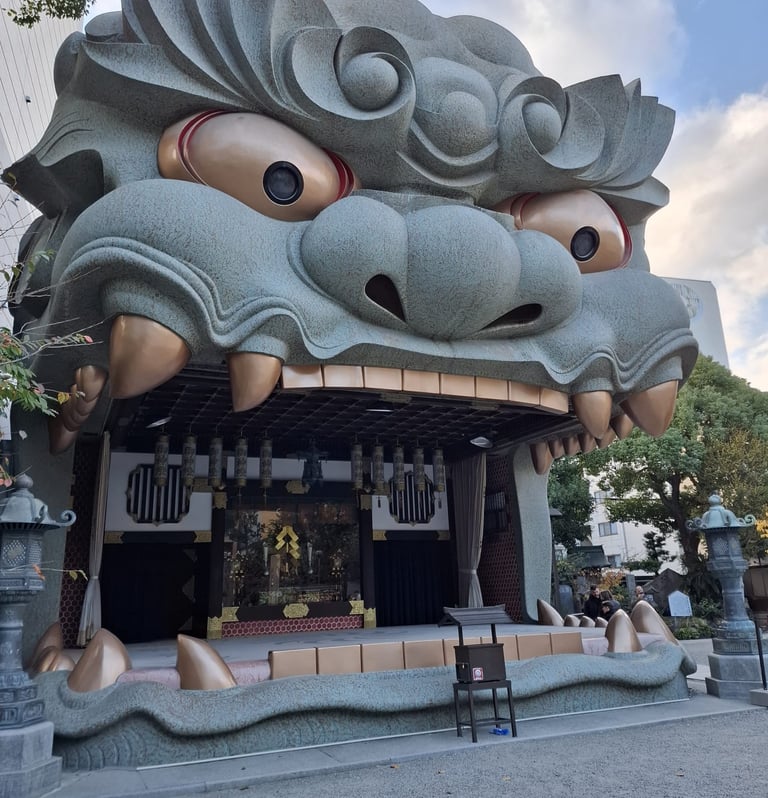
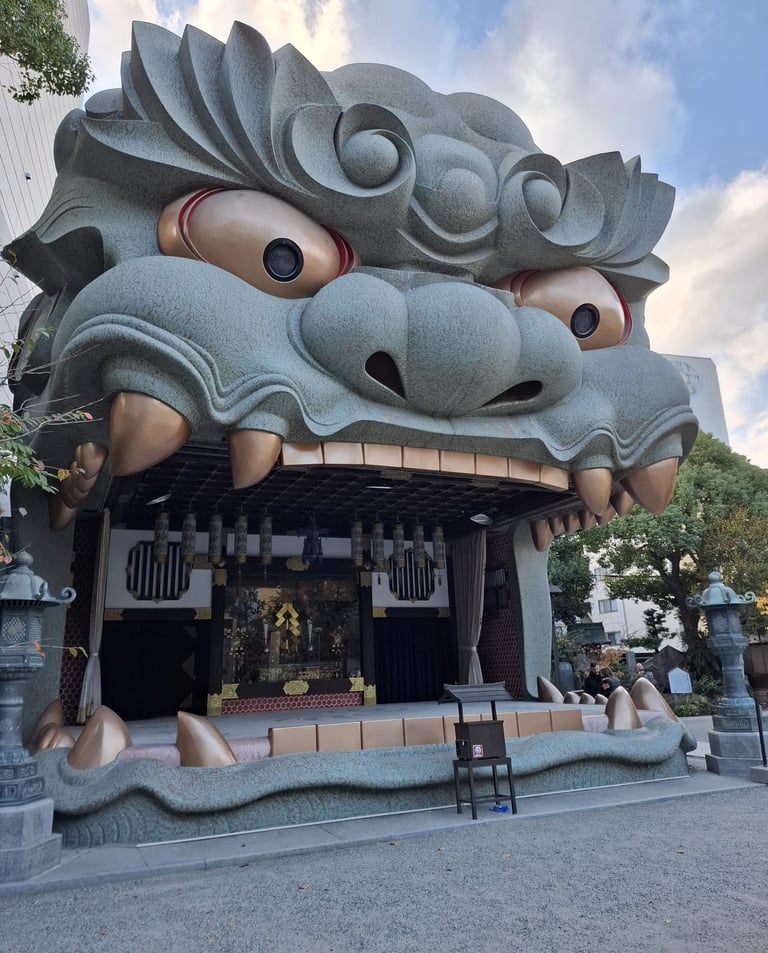
Namba Yasaka Shrine is a famous Shinto shrine located in the Namba district of Osaka, Japan. It is best known for its huge lion head, which stands about 12 metres tall and is visible at the entrance. It is said to be able to “swallow” evil spirits and bring good luck to those who pray there.
The shrine is dedicated to several deities from Japanese mythology, including Susanoo-no-Mikoto. Many visitors come here to pray for protection and good fortune in their studies, work or personal life.
Traditional festivals are also held around the shrine, including a tug-of-war ceremony based on an ancient legend, as well as other seasonal events that attract both locals and tourists.
Despite being surrounded by Osaka’s busy and modern streets, the shrine’s unique design and strong symbolic meaning make it an interesting and atmospheric place to visit.
Admission: Free.
Opening hours: Open 24/7.
DOTONBORI


Dotonbori is one of Osaka’s most famous neighbourhoods, known for its colourful lights and lively atmosphere. Located along a canal, it is one of the busiest areas in the city, especially in the evening.
The area is famous for its street food, including takoyaki and okonomiyaki. Huge illuminated signs and animated billboards make the neighbourhood instantly recognisable.
Dotonbori is the heart of Osaka’s entertainment scene, with restaurants, shops and lively venues packed with people. Walking through the area is a great way to experience the fun and energetic side of Osaka.
OTHER THINGS TO DO IN OSAKA
KAIYUKAN
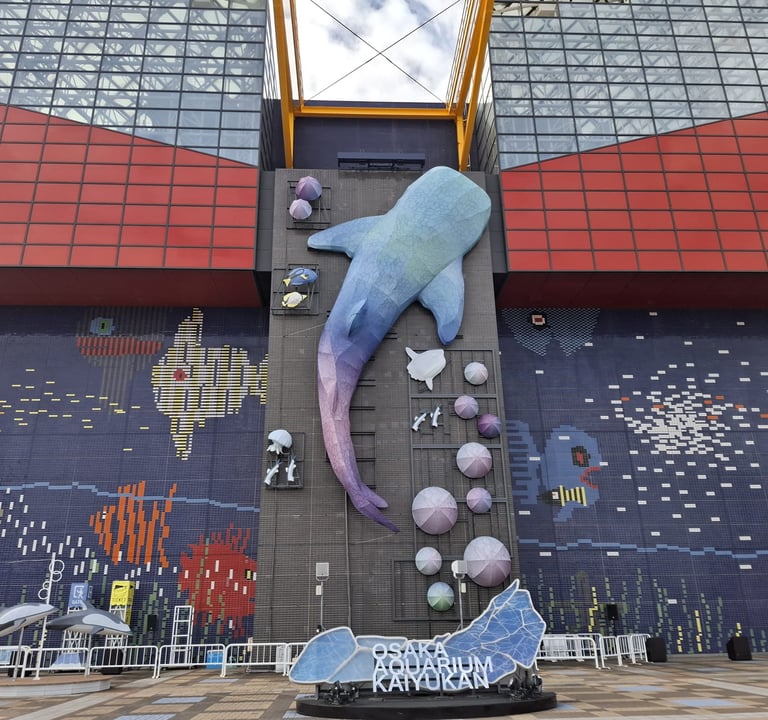
Kaiyukan is known for its huge tanks, home to marine species from around the world, including whale sharks, penguins, jellyfish and sea turtles. The aquarium is divided into themed areas representing different ocean environments, creating an educational and immersive experience.
Kaiyukan is particularly famous for its enormous central tank, where visitors can observe marine life up close. It is an ideal destination for families, tourists and anyone interested in nature and marine wildlife.
KEY INFORMATION:
Standard opening hours: 10:00 AM – 8:00 PM (last admission one hour before closing).
Extended opening hours: 9:30 AM – 8:00 PM (May, October, and from mid-July to late August).
Admission: ¥2,300 (adults).
Audio guide: ¥500.
Note: Prices in JPY may vary depending on the exchange rate.
My travel insurance
—
Traveling, especially on my own, has taught me one thing: you can’t control everything.
A delay, a health issue, or an unexpected problem can happen anywhere, even on the best trips. At first, I underestimated the importance of travel insurance, but over time I started to see it as an extra layer of security rather than an unnecessary expense.
Knowing I’m covered has helped me travel with greater peace of mind and truly enjoy the experience without unnecessary worries.
Everyone is free to make their own choice, but for me, it has become one of those things I’d rather have and not need than need and not have.

SCATTI

Email:
info@odysseytravel.it
+39 3270120054
Telefono:
Seguimi
ODYSSEY TRAVEL
EXPLORE THE WORLD
Authentic itineraries
Information
Contact