

BELGIUM

Belgium is one of those countries that may not immediately catch your attention, but it has a subtle and authentic charm that never fails to surprise. From elegant cities such as Brussels, Bruges, and Ghent, a unique blend of history, architecture, and everyday life creates a truly distinctive atmosphere. From historic squares and picturesque canals to a rich food culture featuring craft beers and local specialties, Belgium is the perfect destination for those who enjoy traveling at a relaxed pace and discovering the little details that, in the end, make all the difference.


PASSPORT: A valid passport or national ID card suitable for international travel is required.
ENTRY VISA: The country is part of the EU and is a member of the Schengen Area, so no entry visa is required.
4-DAY ITINERARY
2 DAYS BRUXELLES
1 DAY GENT
1 DAY BRUGE
DAY 1

BRUXELLES
Brussels is the capital of Belgium and the perfect city for a weekend getaway or a short European escape. It’s easy to explore and offers a wonderful mix of history and culture. The historic city center is full of charm, with the stunning Grand Place, narrow streets lined with chocolate shops, and the famous comic strip murals painted across the city. Welcoming, walkable, and full of character, Brussels is ideal for those looking to enjoy an international atmosphere surrounded by culture, great food, and fascinating architecture.
GRAND PLACE


The Grand Place is the main square in Brussels and is considered one of the most beautiful squares in Europe. It is surrounded by richly decorated historic buildings, most of which were built between the 17th and 18th centuries.
Among the most important buildings in the square are the Brussels Town Hall, famous for its tall Gothic tower, and the Maison du Roi, a historic building that now houses a museum.
The square has played a central role in the city’s political and commercial life and was declared a UNESCO World Heritage Site in 1998. Today, it is one of the most visited attractions in Brussels and hosts major events and celebrations.
ÎLOT SACRÉ
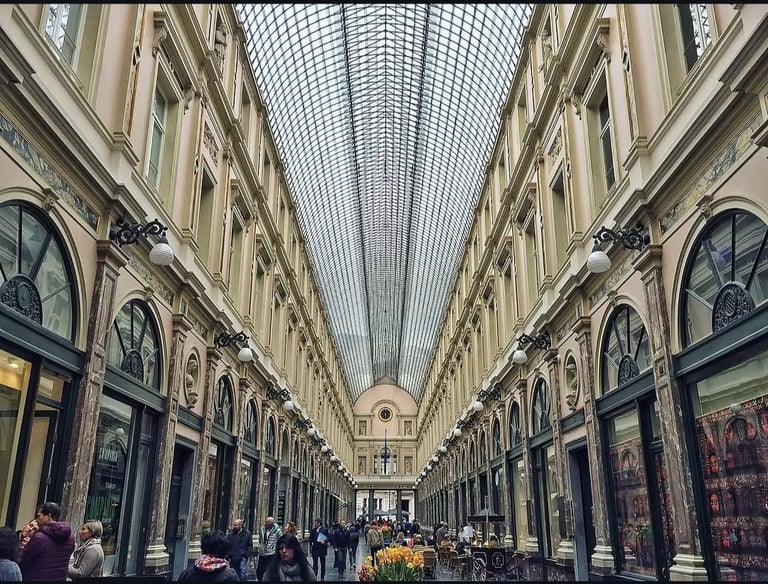
The Îlot Sacré is one of the most lively and charming neighborhoods in the heart of Brussels, located just a short walk from the Grand Place. It is known for its narrow, bustling streets lined with restaurants, traditional brasseries, and local eateries.
The area offers a vibrant atmosphere that is both tourist-friendly and authentic, especially in the evening when the streets come alive with lights and activity. It is the perfect place to sample Belgian specialties such as mussels and fries or simply enjoy a stroll through its historic streets.
An ideal stop during a visit to the city center, Îlot Sacré combines history, gastronomy, and nightlife in a compact and easily walkable area.

The story of Manneken Pis is one of Belgium’s most famous legends.
It is a small bronze statue of a boy urinating, which has become one of the symbols of Brussels. The current statue was created in 1619 by the sculptor Jérôme Duquesnoy the Elder.
There are several legends about its origins:
One legend says that a young boy put out the fuse of a bomb by urinating on it, saving the city from a fire or enemy attack.
Another tells of the son of a nobleman who got lost during a celebration and was later found urinating in a garden. To celebrate his safe return, the statue was created.
According to another tradition, the boy urinated toward the invading armies as an act of defiance.
Over time, Manneken Pis has become a symbol of Belgian humor and independent spirit. The statue also has hundreds of different costumes, which are used to dress it for festivals, celebrations, and special events.
MANEKKEN PIS


ST. MICHAEL AND ST. GUDULA CATHEDRAL


St. Michael and St. Gudula Cathedral is a Gothic church with an impressive façade and two twin towers that make it instantly recognizable. Inside, the space is spacious and bright, with large stained-glass windows decorating the nave and creating a truly atmospheric setting.
The cathedral is also an important venue for official ceremonies and plays a significant role in the city’s religious life. A visit is peaceful and enjoyable, making it an ideal stop during the day and a great opportunity to admire a well-preserved example of Gothic architecture.
Opening Hours (Approximate):
Monday – Friday: 7:00 AM – 6:00 PM (or from 8:00 AM)
Saturday: 8:00/8:30 AM – 3:30/6:00 PM
Sunday: 2:00 PM – 6:00 PM (tourist visits only in the afternoon)
Prices:
Church: Free admission
Crypt: ~€3
SABLON DISTRICT AND CHURCH OF NOTRE-DAME


The Sablon district is one of the most elegant and historic areas of Brussels. It is known for its beautiful squares, art galleries, antique shops, chocolate boutiques, and historic cafés.
The name “Sablon” comes from the sandy soil (“sable” in French) that characterized the area during the Middle Ages. Originally, it was located outside the city walls and was used by the city’s archers for training.
At the heart of the neighborhood stands the beautiful Church of Notre-Dame du Sablon, one of the finest examples of Brabantine Gothic architecture in Belgium.
The Church of Notre-Dame du Sablon is one of the most important Gothic churches in Brussels, built between the 15th and 16th centuries in the elegant Sablon district.
Originally, it was a small chapel belonging to the guild of archers, but it became famous thanks to a legend according to which a woman brought a miraculous statue of the Virgin Mary from Antwerp after experiencing a vision. This transformed the church into an important pilgrimage site.
With the support of the nobility and wealthy families of the city, the chapel was expanded and eventually became a large church in the Brabantine Gothic style.
Opening Hours
Monday to Friday, from 10:00 AM to 6:00 PM.
Saturday and Sunday, from 9:00 AM to 6:00 PM.
Price
Free admission.
ROYAL PALACE


It is the official residence of the King of Belgium, although the royal family does not live here but at the Royal Palace of Laeken.
The palace is mainly used for official ceremonies, diplomatic meetings, and state events. The current building was constructed in the 19th century and features a neoclassical style, with an impressive façade and richly decorated interiors.
During the summer, some of the palace rooms are open to the public, allowing visitors to explore the interiors, including the famous Hall of Mirrors, decorated with artworks and precious materials.
Royal Palace of Brussels – Visit Details
Opening period: From July 21 to early September.
Opening hours: 10:30 AM – 5:00 PM (last admission between 3:45 PM and 4:30 PM).
Closed: Mondays.
Price: Free admission.
Address: Rue Brederode 16, 1000 Brussels.
Tip: To avoid queues, it is best to visit the palace early in the morning.
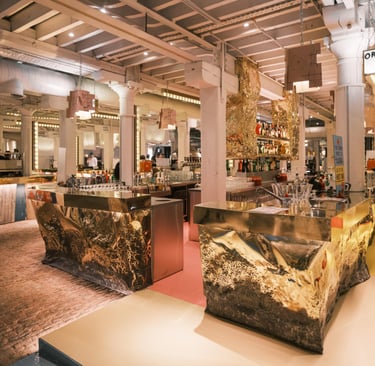
WOLF FOOD MARKET
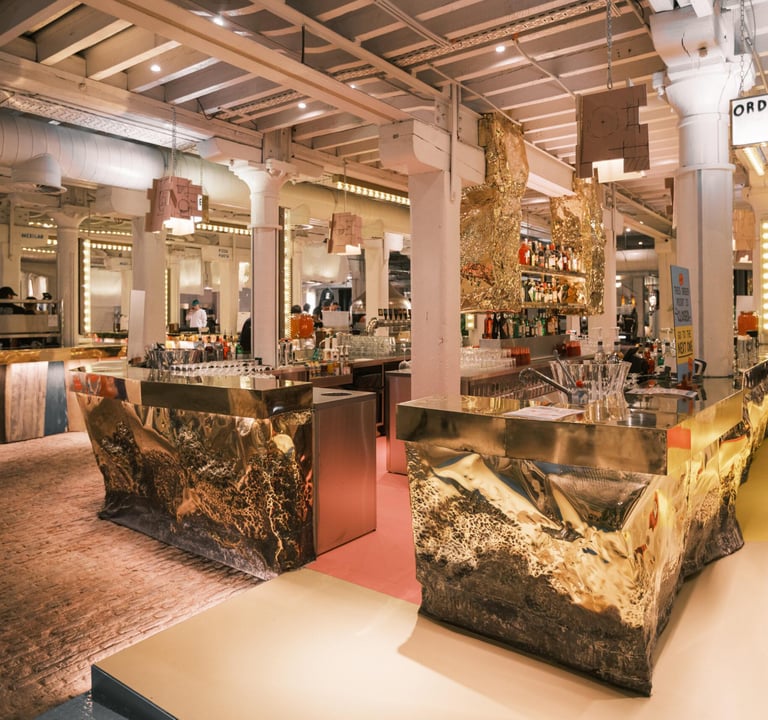
The Wolf Food Market is one of Brussels’ most popular modern food destinations, perfect for anyone looking for a casual yet high-quality dining experience right in the heart of the city.
Located just a short walk from the Grand Place, it is housed in a beautifully renovated historic building. Rather than being a single restaurant, it features a selection of different food stalls offering cuisines from around the world: modern takes on traditional Belgian dishes, gourmet burgers, Asian cuisine, poke bowls, vegetarian and vegan options, as well as cocktail bars and local craft beers.
The concept is that of an indoor food market: visitors order directly from the various stalls and then enjoy their meals in the spacious shared seating areas. This makes the experience social and lively, ideal for groups of friends, couples, or solo travelers who want to sample different cuisines in one place without having to choose just one restaurant.
DAY 2
MINI EUROPA
Mini-Europe is a theme park in Brussels where you can see miniature versions of some of Europe’s most famous landmarks. The replicas are highly detailed and represent cities and landmarks from different countries, such as the Eiffel Tower and Big Ben.
It is a fun and educational attraction suitable for both adults and children, perfect for a light and different experience. It is located near the Atomium, so the two attractions are often visited together.
The visit takes around 1–2 hours and is ideal if you want to take a “tour of Europe” in a short amount of time..
ATOMIUM


The Atomium is one of Brussels’ most iconic landmarks, built for the 1958 World Expo as a symbol of scientific progress and innovation. The structure represents an enlarged iron crystal, magnified billions of times, and consists of nine large spheres connected by tubes.
Inside, visitors can explore a series of permanent and temporary exhibitions, as well as impressive light installations that make the experience particularly atmospheric. Escalators and elevators take visitors up to the panoramic sphere, offering spectacular views over the city and its surroundings.
Opening Hours (Updated for 2026):
Every day: 10:00 AM – 6:00 PM.
Ticket office / last admission: 5:30 PM.
2026 exceptions: On December 24 and 31, it closes at 4:00 PM, while on December 25 and January 1, it opens at 12:00 PM.
Ticket Prices (Online at Atomium.be):
Adults (18–64): €16.00
Children (under 115 cm): Free
Children/Teens (up to 17 years old / students): €8.50
Seniors (65+): €14.00
People with disabilities: €8.50


PARC DU CINQUANTENAIRE
Parc du Cinquantenaire is one of the largest and most scenic parks in Brussels, located in the European Quarter. It is best known for its impressive monumental arch, one of the city’s most recognizable landmarks.
The park is beautifully maintained and perfect for a peaceful walk away from the hustle and bustle of the city center, with spacious green areas and well-organized avenues. It is an ideal place to take a break while exploring Brussels, especially after visiting the nearby European institutions.
THE EUROPEAN QUARTER


The European Quarter is a modern and well-organized area of Brussels, home to the main institutions of the European Union. Here you’ll find important buildings such as the European Parliament and the European Commission, surrounded by wide avenues, public squares, and beautifully maintained green spaces.
The atmosphere is quite different from the historic city center: quieter, more international, and closely connected to the business world, especially during the week. At the same time, there are plenty of cafés, restaurants, and parks where you can stop for a break.
DAY 3

TRAIN
BRUXELLES- GENT

GENT
Ghent is a vibrant and charming city, renowned for its unique blend of history, art, and modern life. The historic center is dominated by impressive medieval buildings, picturesque canals, and lively squares. Ghent is known for its castles, Gothic churches, and museums that showcase centuries of culture and tradition.
Strolling along the canals or stopping at one of the many cafés makes the atmosphere even more special. Thanks to its unique energy and historic charm, Ghent is a must-visit destination for anyone looking to discover the authentic side of Belgium.
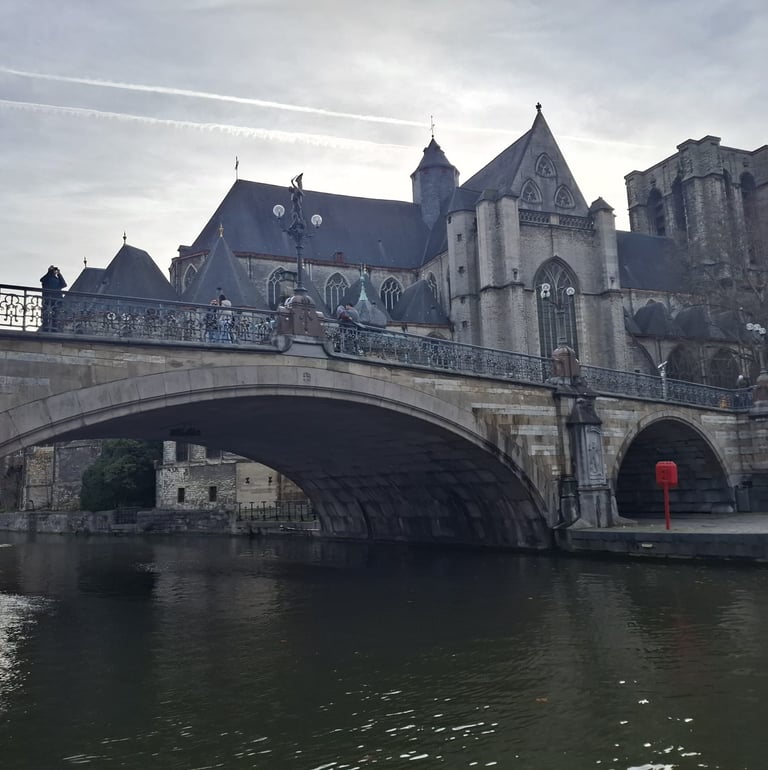
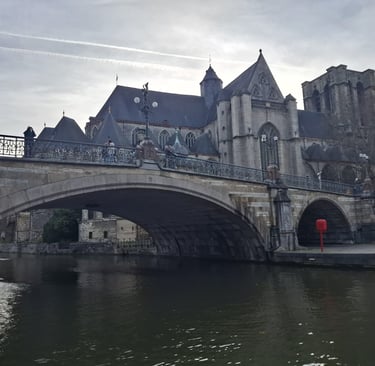
ST. MICHAEL'S BRIDGE
St. Michael’s Bridge is one of the best viewpoints in Ghent, offering a panoramic view of the city. From here, you can admire some of its most iconic landmarks, including the three towers that define the city’s skyline, creating a truly spectacular scene.
It’s the perfect place to stop for a few minutes, take some photos, and enjoy the atmosphere, especially at sunset when the light makes the surroundings even more magical.
Thanks to its central location, it is easy to include in a walking tour and is one of the spots that best captures the beauty of Ghent.
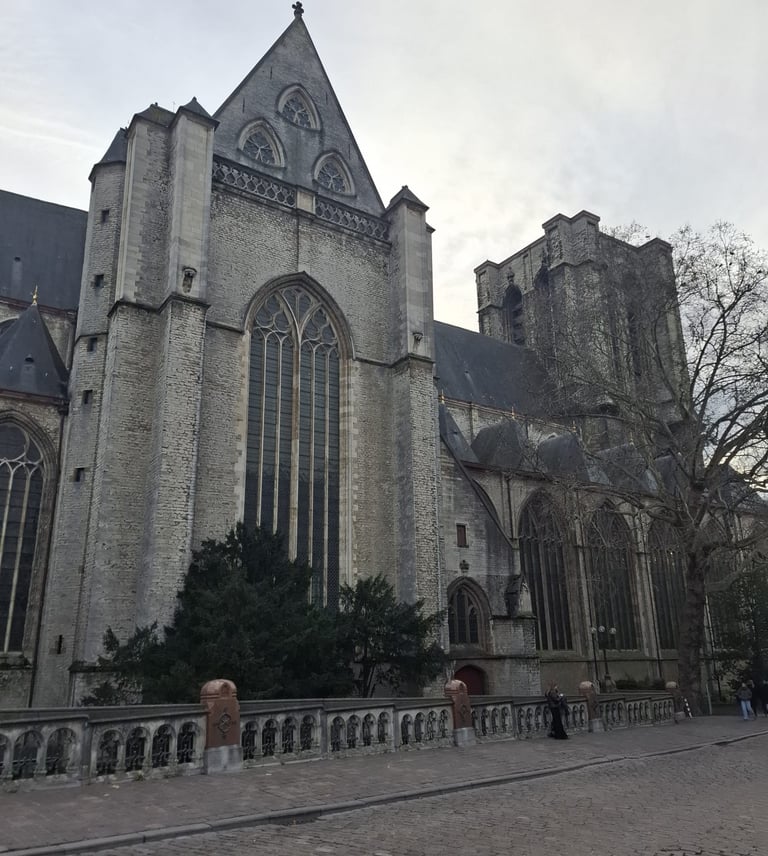
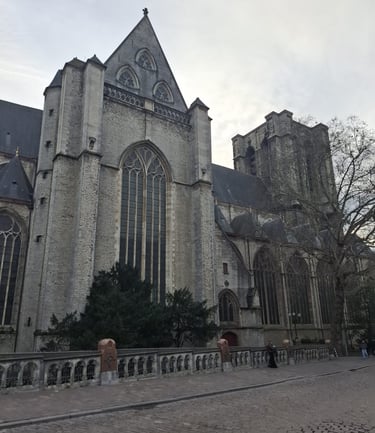
ST.MICHAEL'S CHURCH
St. Michael’s Church is one of the main churches in Ghent, located near St. Michael’s Bridge, one of the most beautiful spots in the city.
It features a simple yet impressive Gothic style, with a grand façade and a tower that was never completed.
It is an easy stop to include during a walk through the city center, even if only to admire the exterior along with the beautiful canal views.
2026 Opening Hours & Ticket Prices (Sacra di San Michele):
Opening: Generally open from Tuesday to Sunday (closed on Mondays). It is recommended to check the official website for any exceptional closures.
Ticket Prices (online purchase recommended):
Full price: €15.00
Reduced (ages 6–18, seniors 65+): €13.00
Special categories / partner discounts: €5.00
Free: Children under 6 and visitors with disabilities (tickets must be collected at the ticket office).
KORENMARKT
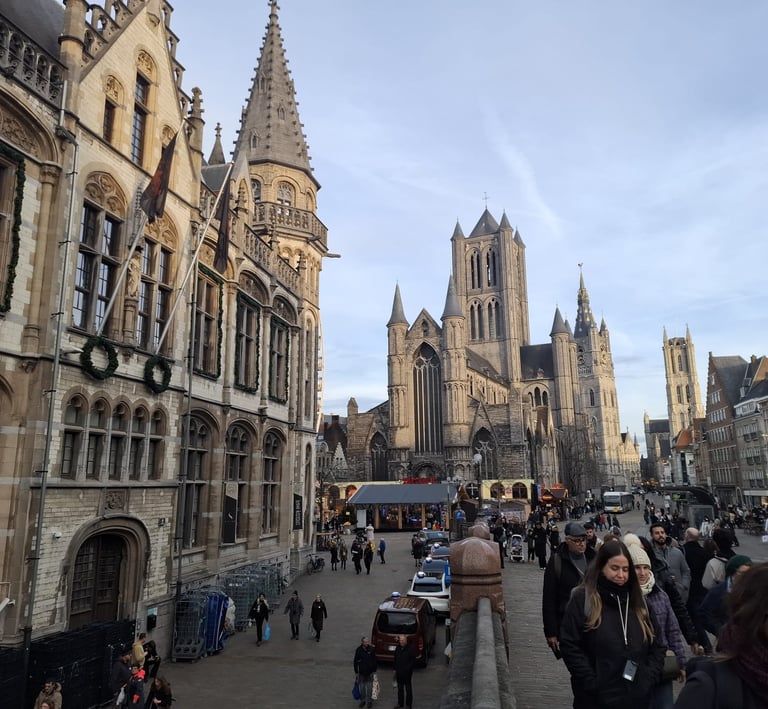
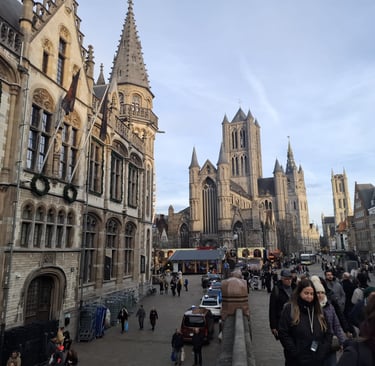
Korenmarkt is one of the liveliest squares in Ghent and the historic heart of the city. In the past, it was the city’s main grain market, which is where its name comes from.
Today, the square is surrounded by beautiful historic buildings, restaurants, cafés, and shops, making it a popular meeting place for both locals and tourists. From here, you can admire some of Ghent’s most famous landmarks and easily begin a walk through the city’s picturesque canals and medieval streets.
ST. NICHOLAS’ CHURCH


Built mainly in the Gothic style between the 13th and 15th centuries, it is characterized by imposing blue-gray stone walls typical of the Flanders region. Inside, you’ll find magnificent altars, stained-glass windows, and works of art that reflect Ghent’s rich religious history.
The church is also part of the famous “three-tower skyline”, together with the Belfry of Ghent and St. Bavo’s Cathedral, making it one of the most photographed landmarks in the city.
Opening Hours (Approximate):
Monday: 2:00 PM – 5:00 PM
Tuesday – Sunday: 10:00 AM – 5:00 PM
Note: Opening hours may vary due to religious services or special events. It is recommended to check locally.
Prices:
Admission: Free.
BELFRY OF GHENT
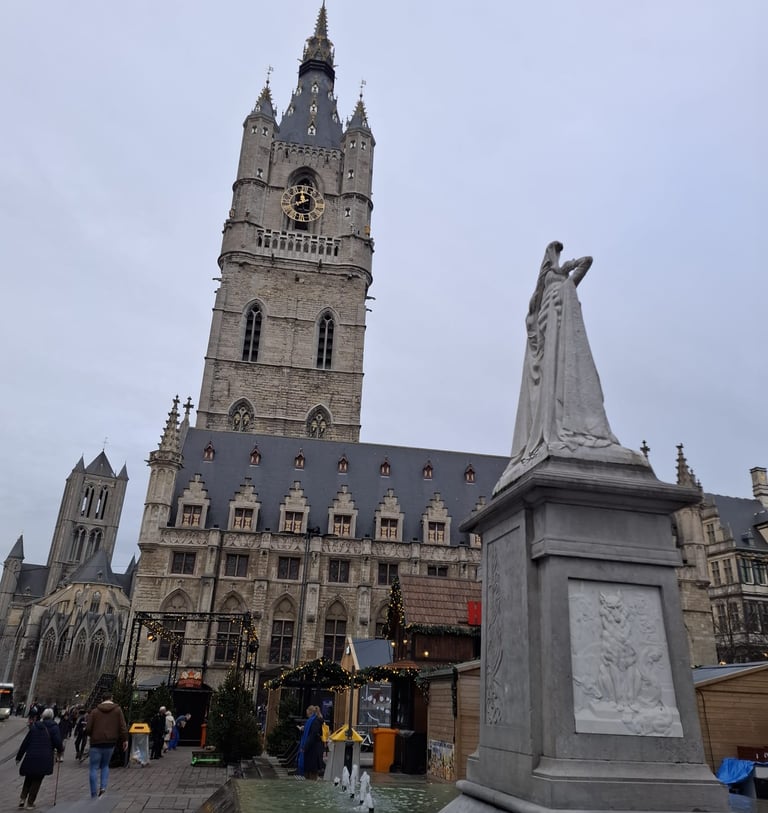
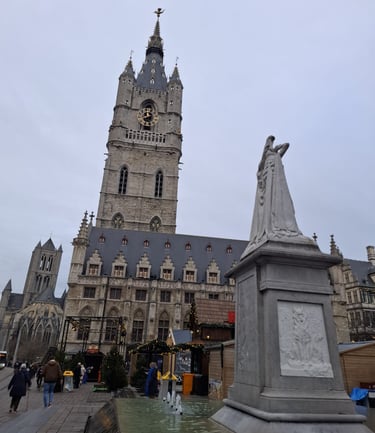
The Belfry of Ghent is the city’s historic bell tower and one of its most recognizable landmarks. Built between the 14th and 15th centuries, the tower was used to protect the city archives and to warn residents in case of danger or fire.
Standing approximately 91 meters tall, visitors can climb to the top and enjoy spectacular panoramic views over Ghent’s historic center, its canals, and the surrounding medieval buildings. The façade is decorated with sculptures and Gothic details that reflect the city’s political and economic history.
Opening Hours: Generally open daily from 10:00 AM to 6:00 PM (last admission is often one hour earlier) during the high season.
Prices: Standard admission is approximately €10–12.
CATTEDRALE DI SAN BAVONE
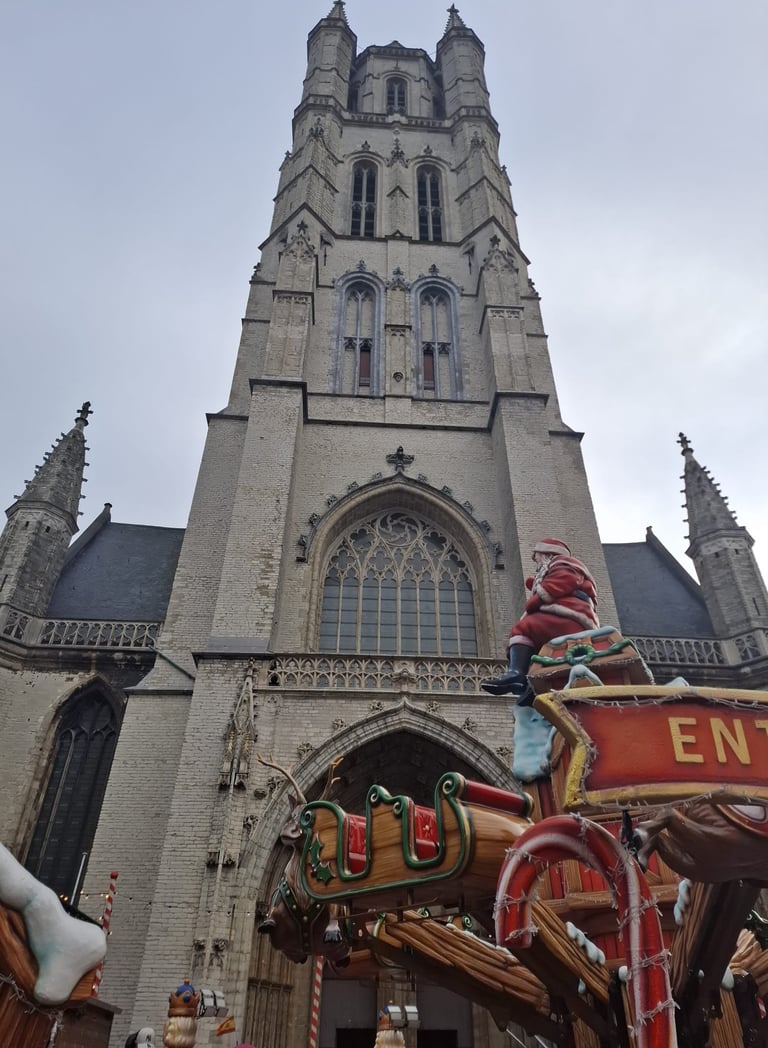
Built in the Gothic style and dedicated to St. Bavo, the cathedral houses extraordinary works of art, including the famous Ghent Altarpiece, also known as the Adoration of the Mystic Lamb, by the Van Eyck brothers.
The cathedral features impressive nave interiors, stained-glass windows, and refined architectural details that reflect centuries of religious and artistic history. Beyond its religious significance, it is a must-visit for anyone looking to discover Ghent’s rich cultural and artistic heritage.
Opening Hours & Prices (General Information):
Opening Hours: Open daily, usually from 8:30/9:00 AM to 5:00/6:00 PM, with seasonal variations.
Cathedral Admission: Free.
STADHUIS VAN GENT
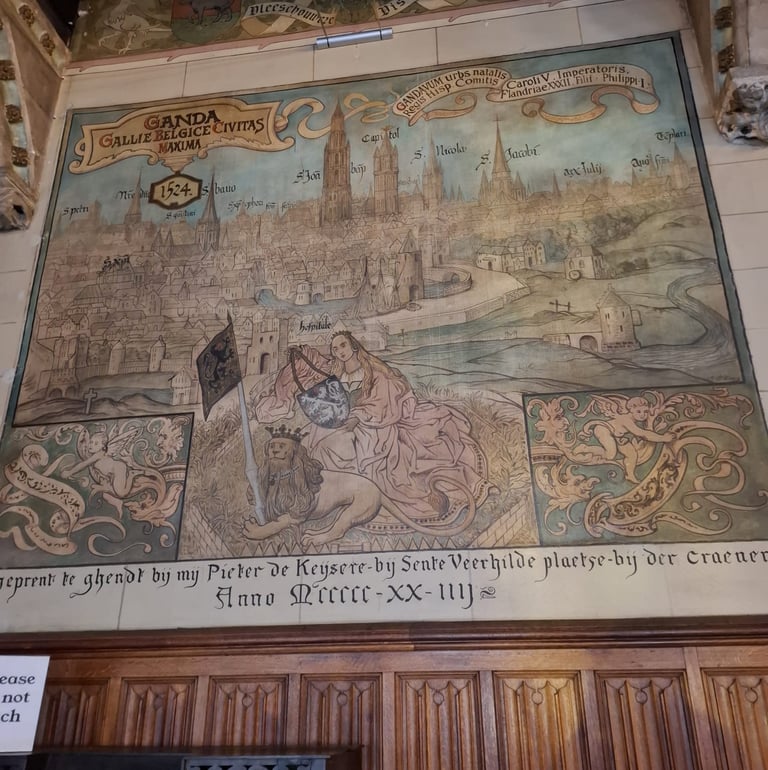
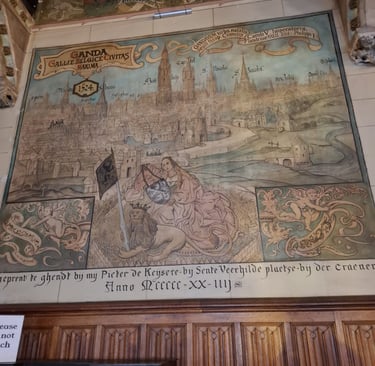
Ghent City Hall, known locally as Stadhuis van Gent, is one of the city’s most important historic buildings. Located near Korenmarkt, the city hall is renowned for its eclectic architecture, which combines Gothic, Renaissance, and Baroque elements, reflecting the different phases of its construction and expansion over the centuries.
The façade is richly decorated with sculptures depicting city coats of arms and allegorical figures, while inside, visitors can find historic rooms featuring remarkable architectural details. It is a symbol of Ghent’s political and cultural history and a must-see for anyone exploring the historic city center.
Price: Free admission.
Opening Hours (Approximate):
Monday: 2:00 PM – 5:00 PM
Tuesday – Sunday: 10:00 AM – 5:00 PM
GRAVENSTEEN CASTLE
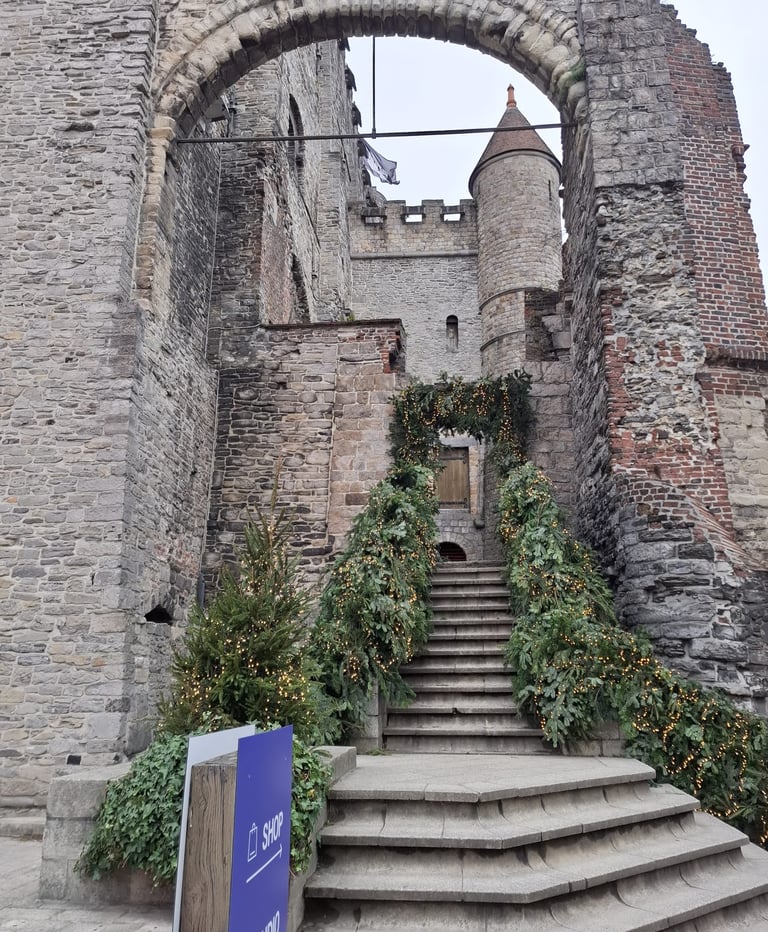
Gravensteen Castle, also known as the Castle of the Counts, was built in the late 12th century, around 1180, by Philip of Alsace, Count of Flanders. It was constructed during the medieval period, when strengthening the power of feudal lords and maintaining control over the territory was essential.
For this reason, the castle was designed as a strong military fortress, capable of withstanding attacks and sieges. Over time, it underwent several modifications. As early as the 13th and 14th centuries, some parts were adapted for new administrative and judicial functions, while its defensive role gradually declined.
Opening Hours & Prices (Updated for 2026):
Opening Hours: Open daily from 10:00 AM to 6:00 PM (last admission at 4:40 PM).
Prices (Approximate):
Adults: €13.50
Young adults (19–25): €10.50
Children/Teens (0–18): Free
Special Closures: December 24, 25, and 31, and January 1.
PATERSHOL
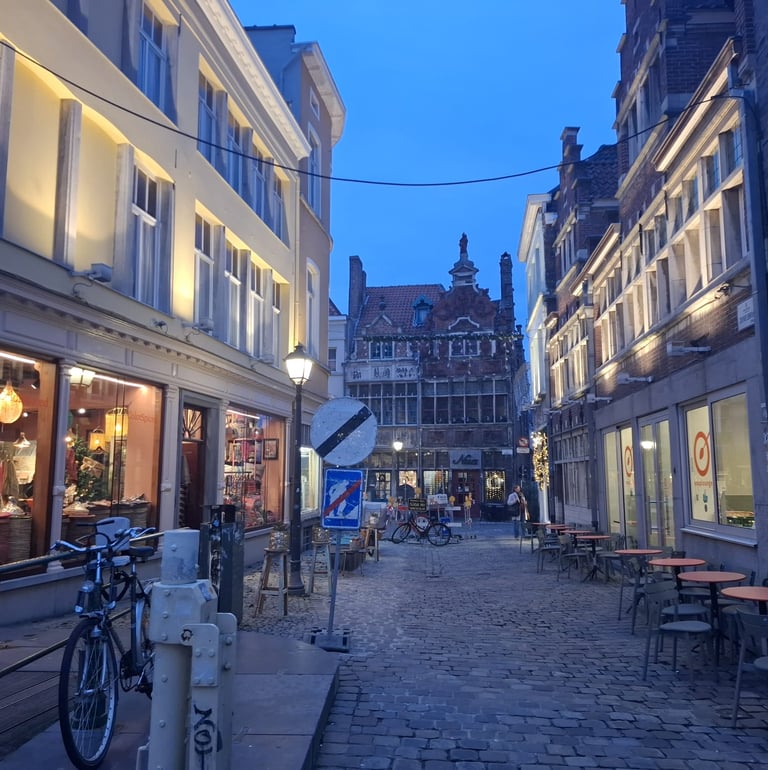
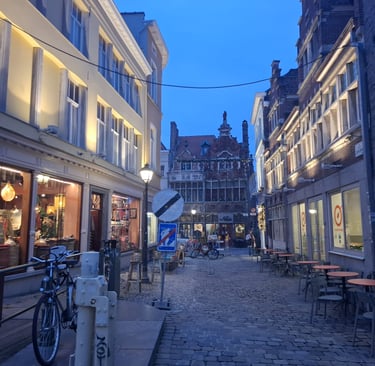
Patershol is one of the most beautiful and charming neighborhoods in Ghent, known for its narrow streets and the medieval atmosphere that can still be felt today.
As you wander through the neighborhood, you’ll come across historic houses, cozy restaurants, and stylish cafés, giving the area a distinctive character compared to the more modern parts of the city. It is peaceful during the day, making it perfect for a leisurely stroll, while in the evening it becomes livelier and even more atmospheric.
It’s an ideal stop for anyone looking to discover a more authentic side of Ghent and experience the city at a slower pace, away from the busiest areas.
GRASLEI E KORENLEI


These two sides of the canal are lined with historic medieval merchant houses, many of which now host restaurants, cafés, and shops. In the past, they formed the commercial heart of the city: Graslei was associated with the trade of grain and fodder, while Korenlei takes its name from the grain (“koren”) that was once stored and sold here.
Today, the two areas are among the most picturesque spots in Ghent, attracting visitors for leisurely walks along the canal, photography, and boat tours.
DAY 4

TRAIN
GENT-BRUGES

BRUGES
Bruges is a fairytale-like city famous for its canals, picturesque squares, and medieval towers. Strolling through the historic center feels like stepping back in time, surrounded by beautifully decorated façades, charming bridges, and romantic corners.
Bruges is also renowned for its artisanal chocolate, local beers, and museums steeped in history. Every corner of the city reveals a unique blend of charm and culture, making it a must-visit destination for anyone looking for postcard-perfect scenery and a truly magical atmosphere.
GROTE MARKT
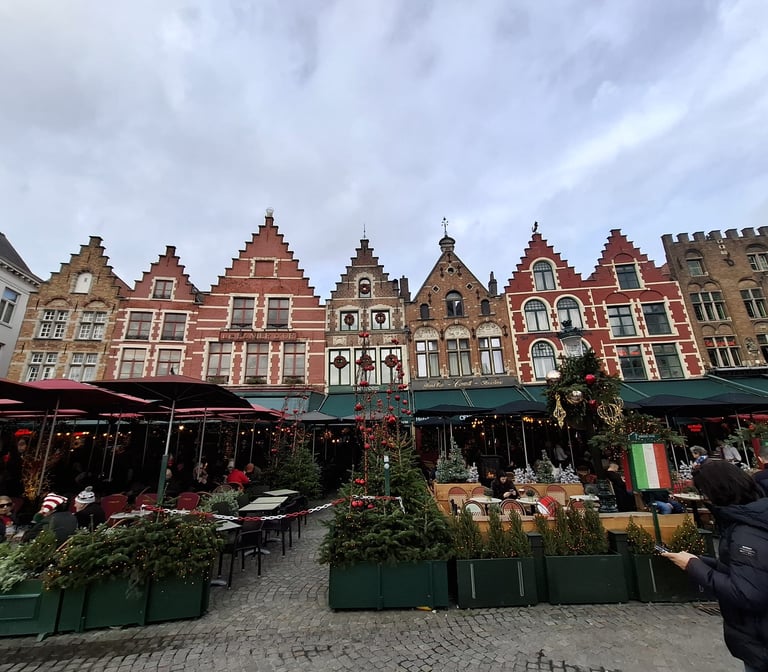
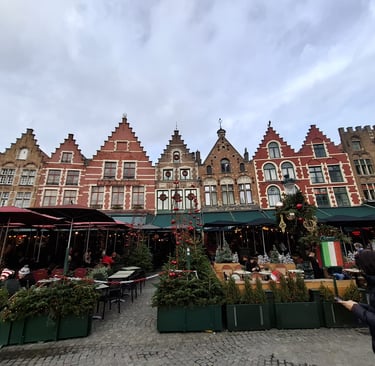
Grote Markt is the main square in Bruges and the historic heart of the city. Surrounded by charming medieval houses with colorful façades, the square is home to numerous restaurants, cafés, and shops.
At the center stands the monument dedicated to Flemish heroes Jan Breydel and Pieter de Coninck. From here, you can also admire the famous Belfry of Bruges, the medieval bell tower that dominates the city’s skyline.
Grote Markt is one of the liveliest and most photographed places in Bruges.
BEFFROI
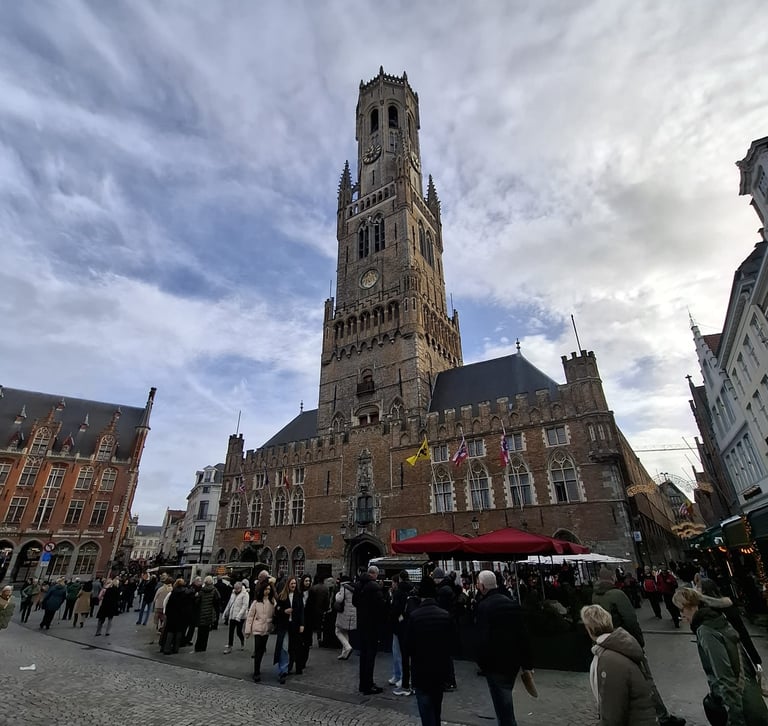
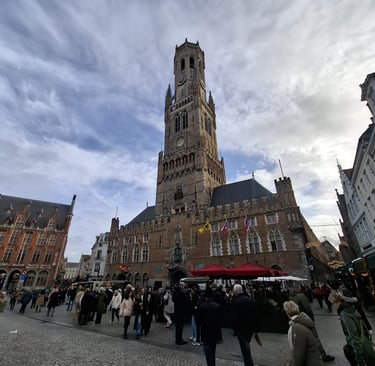
The Belfry of Bruges is the famous medieval bell tower that overlooks Grote Markt in the heart of Bruges. Built in the 13th century, it stands approximately 83 meters tall and is one of the city’s most recognizable landmarks.
In the past, the tower played an important civic role: it housed official documents and served as a lookout tower. Today, visitors can climb its 366 steps to reach the top and enjoy spectacular panoramic views over Bruges’ medieval rooftops and picturesque canals.
HISTORIUM BRUGES


Historium Bruges is an interactive museum dedicated to the history of Bruges, located in the city’s main square, Markt.
The museum allows visitors to discover what the city was like in the 15th century, when Bruges was one of Europe’s most important commercial centers. Through films, reconstructed sets, special effects, and virtual reality, visitors can experience a fascinating journey back in time.
One of the most interesting parts is the immersive story following a young apprentice and a young woman, offering a glimpse into everyday life, trade, and art during the period. Today, Historium is one of the city’s most popular tourist attractions.
BASILICA OF THE HOLY BLOOD
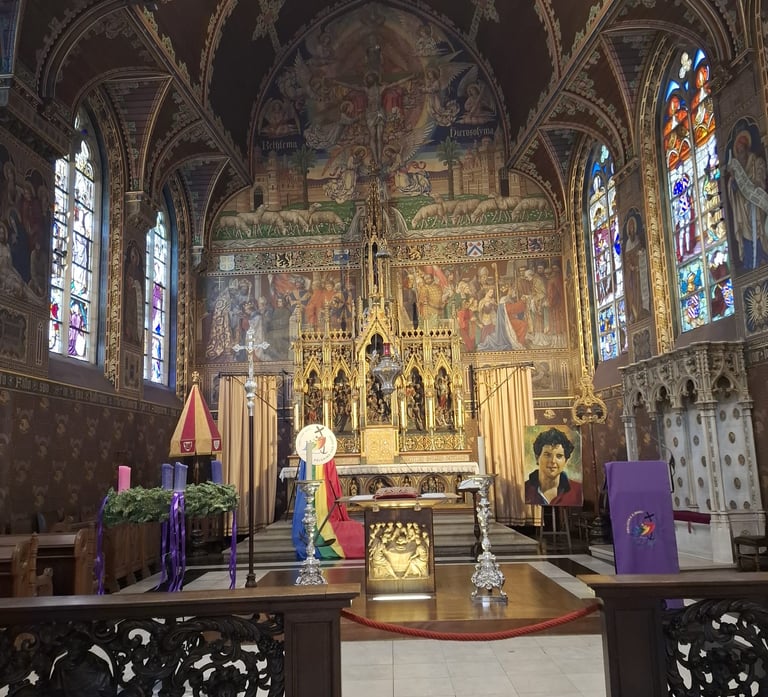
Historium Bruges is an interactive museum dedicated to the history of Bruges, located in the city’s main square, Markt.
The museum allows visitors to discover what the city was like in the 15th century, when Bruges was one of Europe’s most important commercial centers. Through films, reconstructed sets, special effects, and virtual reality, visitors can experience a fascinating journey back in time.
One of the most interesting parts is the immersive story following a young apprentice and a young woman, offering a glimpse into everyday life, trade, and art during the period. Today, Historium is one of the city’s most popular tourist attractions.
Useful Information:
Opening Hours: Generally 10:00 AM – 5:15 PM.
Veneration of the Relic: Afternoons from 2:00 PM to 4:00 PM; Friday mornings also from 10:15 AM to 11:00 AM.
Prices: Basilica admission is free; Museum/Treasury €5.
BURG DI BRUGES
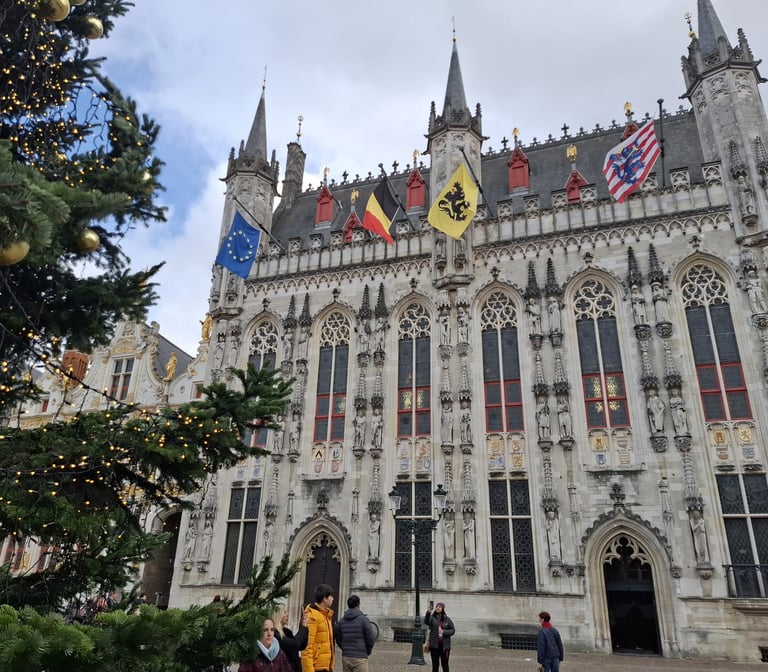
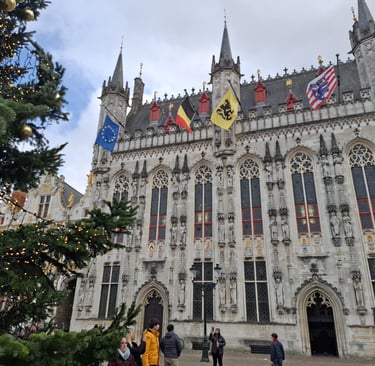
Burg Square is one of the most important and historic squares in Bruges, located just a short walk from Markt but offering a quieter and more elegant atmosphere. Some of the city’s most significant buildings are concentrated here, including the Bruges City Hall, one of the oldest in Belgium, with its richly detailed Gothic façade.
Nearby, you’ll also find other historic buildings showcasing different architectural styles, creating an interesting contrast that reflects the various periods the city has experienced. Walking through the square gives you the feeling of being in a place where history is still very much alive.
It’s an easy stop to include while exploring the city center, perfect for taking a few minutes to admire the architectural details and enjoy a more peaceful atmosphere away from the busier areas.
CHURCH OF OUR LADY
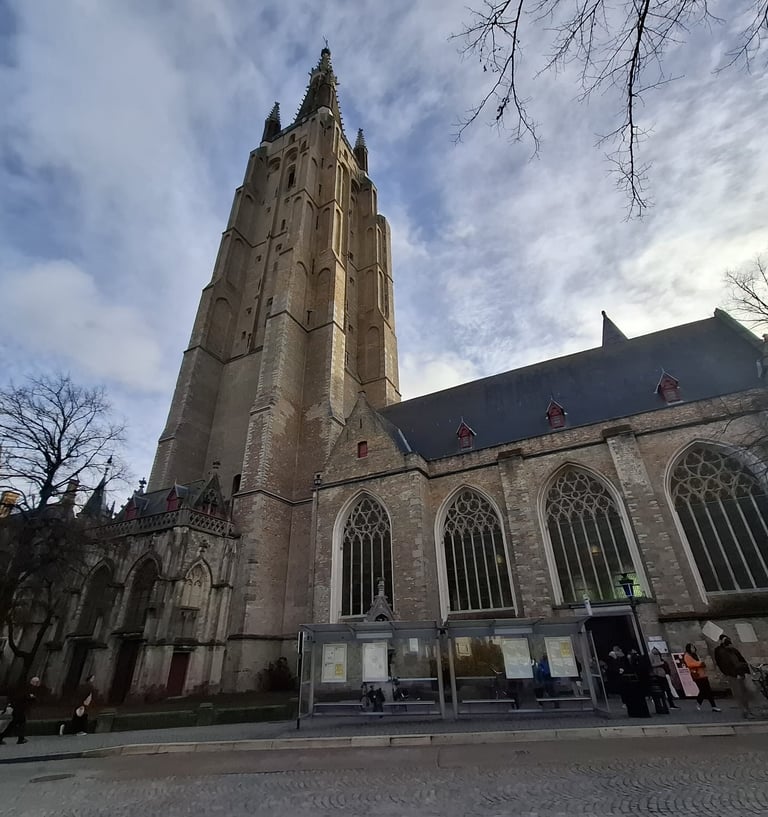
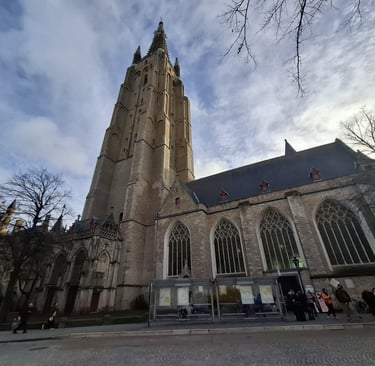
Church of Our Lady is one of the most important churches in Bruges and one of the city’s most iconic landmarks. Built between the 13th and 15th centuries in the Gothic style, it is famous for its impressive brick tower, which rises more than 120 meters and is one of the tallest in Belgium.
Inside, the church houses important works of art, including the famous Madonna and Child sculpture by Michelangelo. The church is a must-see for anyone visiting Bruges, both for its remarkable architecture and its great historical and artistic significance.
Detailed Information – Church of Our Lady (Bruges):
Prices (O.L.V.-kerk Museum):
Adults: €15.00
Young visitors (13–25 years): €7.00–€13.00
Children (up to 12 years): Free
Combined ticket (Gruuthuse Museum + Church Museum): €19.00
Opening Hours (Approximate):
Monday – Saturday: 9:30 AM – 4:30 PM
Sunday: 12:00 PM – 4:30 PM
MINNEWATER LAKE
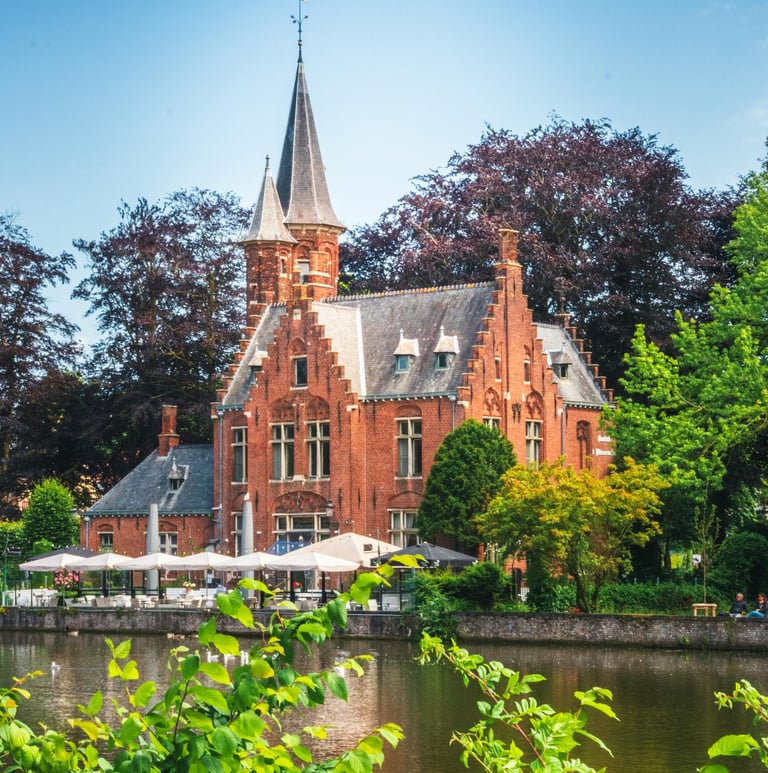
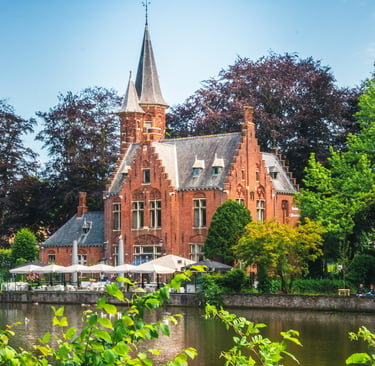
Minnewater Lake is one of the most romantic spots in Bruges. Also known as the “Lake of Love,” it is located near the entrance to the historic city center and is surrounded by trees, grassy areas, and peaceful walking paths.
The lake is crossed by a small stone bridge and is often home to swans, one of the symbols of the city. Thanks to its peaceful atmosphere and beautiful scenery, it is the perfect place for a relaxing stroll and a chance to admire one of Bruges’ most picturesque corners.
My Travel Insurance
—
Traveling, especially on my own, has taught me one important thing: you can’t control everything. A delay, a health issue, or an unexpected problem can happen anywhere, even on the best trips. At first, I underestimated travel insurance, but over time I started seeing it as an extra layer of security rather than an unnecessary expense.
Knowing that I was covered helped me travel with greater peace of mind and truly enjoy the experience without unnecessary worries. Everyone is free to make their own choice, but for me, travel insurance has become one of those things I’d rather have and never need than need and not have.

Email:
info@odysseytravel.it
+39 3270120054
Telefono:
Seguimi
ODYSSEY TRAVEL
EXPLORE THE WORLD
Authentic itineraries
Information
Contact